09 October 2026
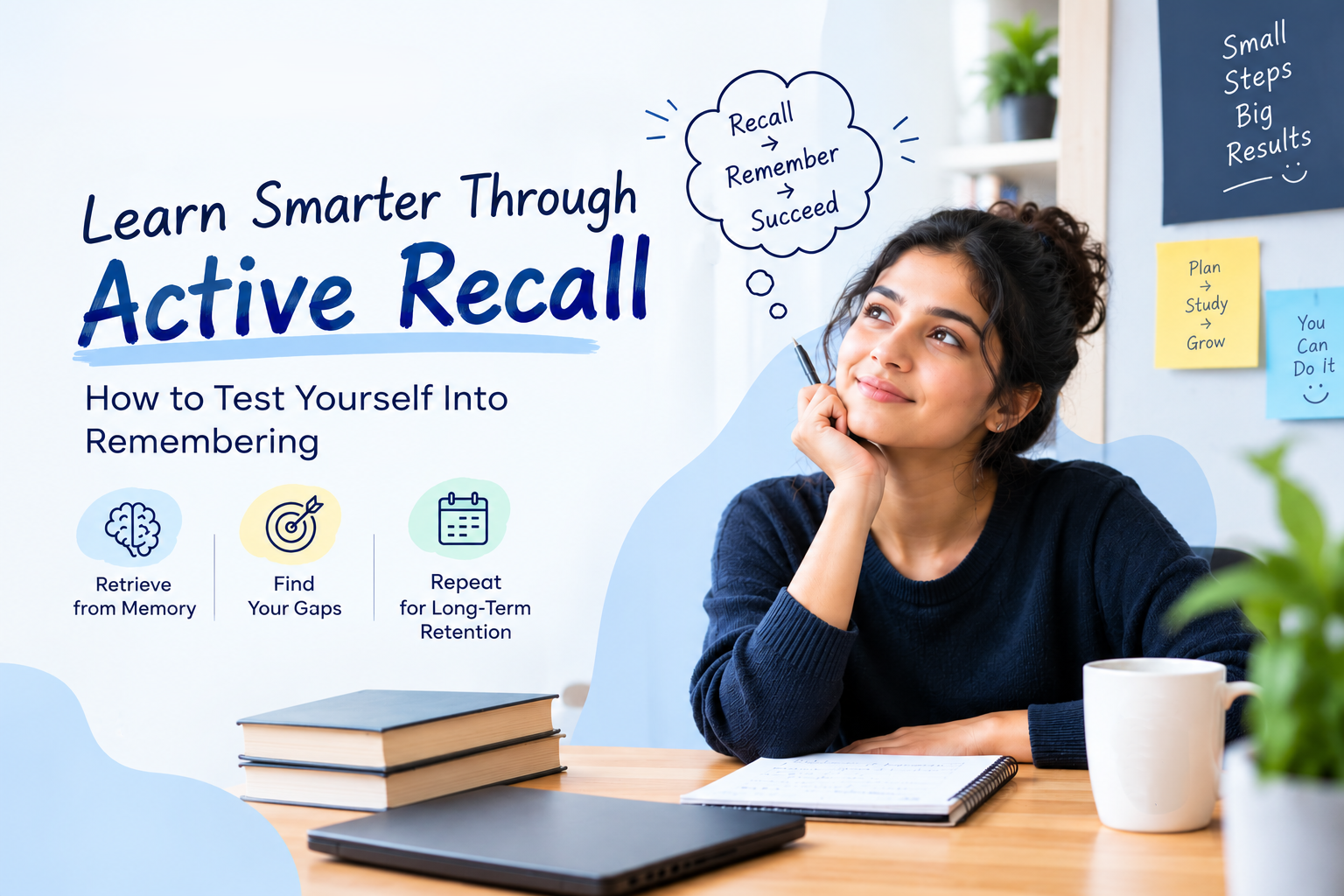
Learn Smarter Through Active Recall: How to Test Yourself Into Remembering
Re-reading your notes may feel productive because the information looks familiar. But recognizing something on a page is not the same as remembering it during an exam.
Active recall is a study method that helps you remember information by retrieving it from memory instead of simply reading it again. It encourages you to test what you know, identify gaps in your understanding, and strengthen your learning over time.
Why Re-Reading Often Fails
When you repeatedly read the same material, the information may start to feel familiar. This can create the impression that you have learned it well.
However, exams often require you to recall information without seeing the original notes. If you cannot explain a concept without looking at the page, you may need more practice retrieving it from memory.
Active recall helps bridge this gap by making you practice remembering what you have learned.
The 5-Step Active Recall Framework
1. Close the Material
After studying a topic, close your textbook, notes, or learning resource. Give yourself an opportunity to remember the information without looking at the answers.
2. Retrieve What You Remember
Write down or explain everything you can remember about the topic. You can use a blank page, flashcards, or questions you have prepared beforehand.
Do not worry if you cannot remember everything immediately. The purpose is to discover what you know and what needs more attention.
3. Check Your Answers
Open your notes and compare them with what you recalled. Identify missing details, incorrect answers, and concepts that need further understanding.
4. Repair the Gaps
Review the parts you missed and explain them in your own words. Focus on understanding why something happens and how different ideas are connected, rather than memorizing sentences.
5. Repeat After a Gap
Test yourself again later instead of repeating the same exercise immediately. You can try another session the next day, followed by another after a few days and again about a week later. Adjust the intervals depending on how well you remember the material.
Combining active recall with spaced repetition can help you retain information for longer.
Why Does Active Recall Work?
Active recall makes learning an active process. Instead of receiving information repeatedly, you practice finding it in your memory.
This process helps you identify weaknesses in your understanding and gives you an opportunity to correct them. Even when recalling an answer feels difficult, checking and correcting your response can make the learning session valuable.
The goal is not simply to get every answer right. It is to understand what you know, recognize what you have forgotten, and improve with each attempt.
Common Active Recall Mistakes to Avoid
Looking at the answer too soon: Give yourself enough time to think before checking your notes.
Practicing only familiar topics: Spend more time on concepts you struggle to remember instead of repeatedly testing only what you already know.
Skipping follow-up sessions: A single recall session may not be enough. Revisiting information over time helps reinforce learning.
Relying only on multiple-choice questions: Multiple-choice questions can be useful, but answering in your own words often gives you a clearer picture of what you genuinely remember.
How to Use Active Recall for Exam Revision
Turn each chapter into five or more questions. After studying, close your notes and answer those questions from memory.
Check your responses and make a list of the concepts you missed. During your next revision session, focus on those weaker areas before testing yourself on the entire chapter again.
As your exam approaches, this approach helps you direct your time towards the topics that need the most attention instead of repeatedly reviewing everything.
Make Active Recall Part of Your Learning Routine
Active recall is not just about testing yourself for a grade. It is a way to understand what you have learned and identify what still needs work.
Start with one topic, ask yourself questions, retrieve the answers, and review your mistakes. With regular practice, you can develop a more purposeful and effective study routine.
Explore the Active Recall method in YMetaconnect’s Learning Studio and take a more active approach to your learning.