Worked Examples:
Learn Smarter With Step-By-Step Guidance

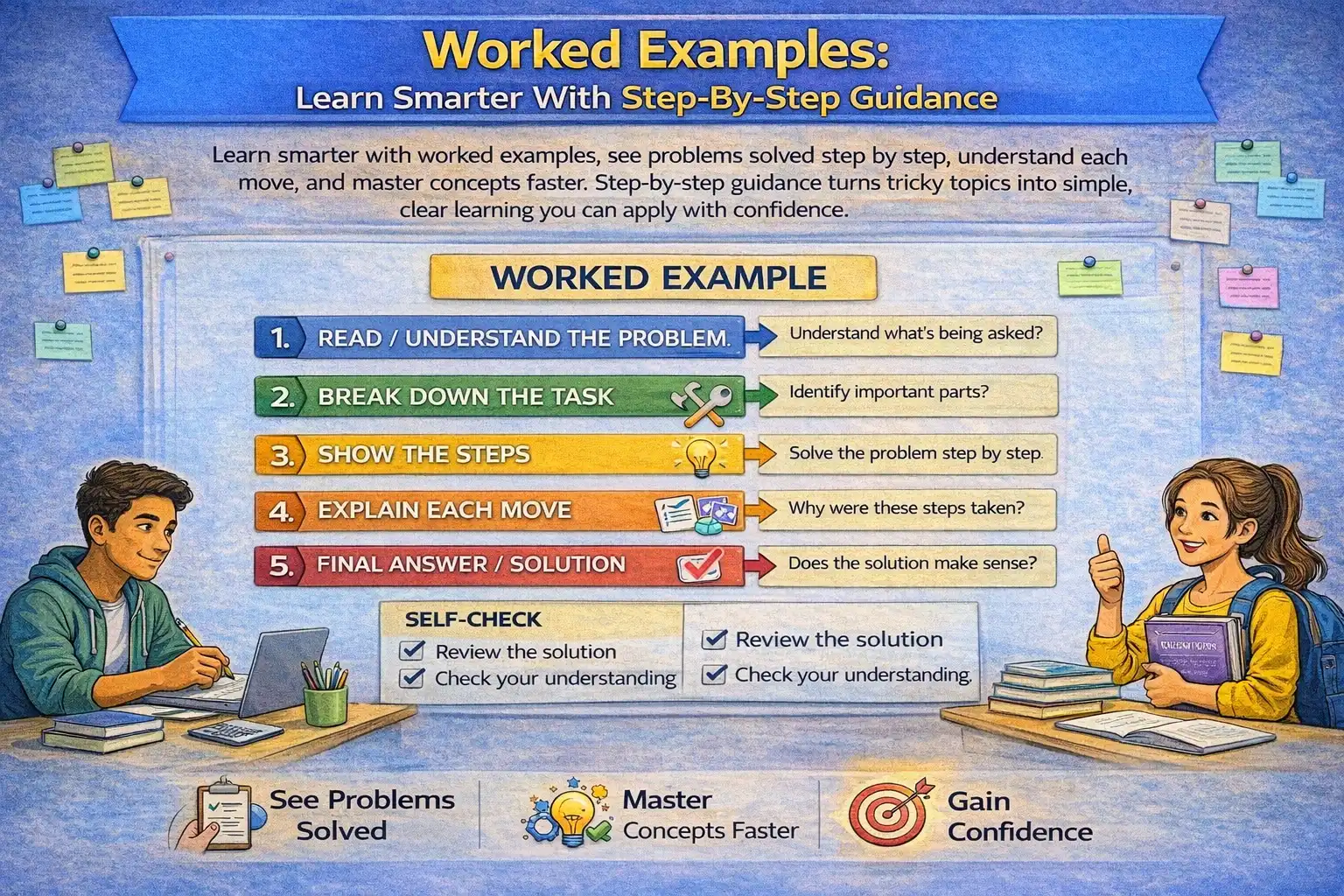
Learn smarter with worked examples, see problems solved step by step, understand each move, and master concepts faster. Step-by-step guidance turns tricky topics into simple, clear learning you can apply with confidence.

Try for Free

What Is the Worked Examples?

Worked examples are step-by-step solutions that show learners exactly how a problem is solved. Instead of struggling through complex questions on their own, students first study a clear example that explains each step, the logic behind it, and the reason the solution works. This method is helpful in subjects like math, science, programming, and business studies.

Try for Free

How Does Worked Examples Boost Learning?

Worked examples simplify complex tasks and help learners grasp problem-solving methods quickly. Key benefits include:

Clear Understanding of Processes

Seeing each step makes it easier to understand why a method works. Learners don’t just memorize answers—they understand the full approach.

Better Memory and Recall

When steps are broken down, the brain connects ideas more easily. This improves recall during exams, assignments, and real-world tasks.

Reduces Cognitive Load

Beginners often feel overloaded. Worked examples break problems into small, simple steps so learners can focus without feeling stressed or stuck.

Builds Confidence

Watching a solved example gives learners a strong starting point. They feel ready to try similar problems independently.

Sharpens Problem-Solving Skills

Worked examples act as templates that learners can adapt. Once the pattern is clear, tackling new problems becomes easier.

Saves Study Time

Instead of guessing or getting stuck, learners quickly understand methods by reviewing structured examples, making revision faster.

How Do Worked Examples Works?

Worked examples help learners understand complex problems by walking them through each step. Here’s how this method works:

  • Study the Full Solution

    Read or observe the complete example to understand how and why each step is carried out.

  • Identify Key Steps

    Notice the main actions, such as formulas used, rules applied, or decisions taken, to understand the core method.

  • Understand the Reasoning

    Focus on the logic behind each step. This transforms examples from “copying answers” to learning true problem-solving.

  • Attempt a Similar Problem

    Apply the same steps to a new problem to check understanding and build accuracy.

  • Review and Correct Mistakes

    Compare your attempt with the worked example to find errors, refine thinking, and improve confidence.

How YMetaconnect Enhance This Learning Method?

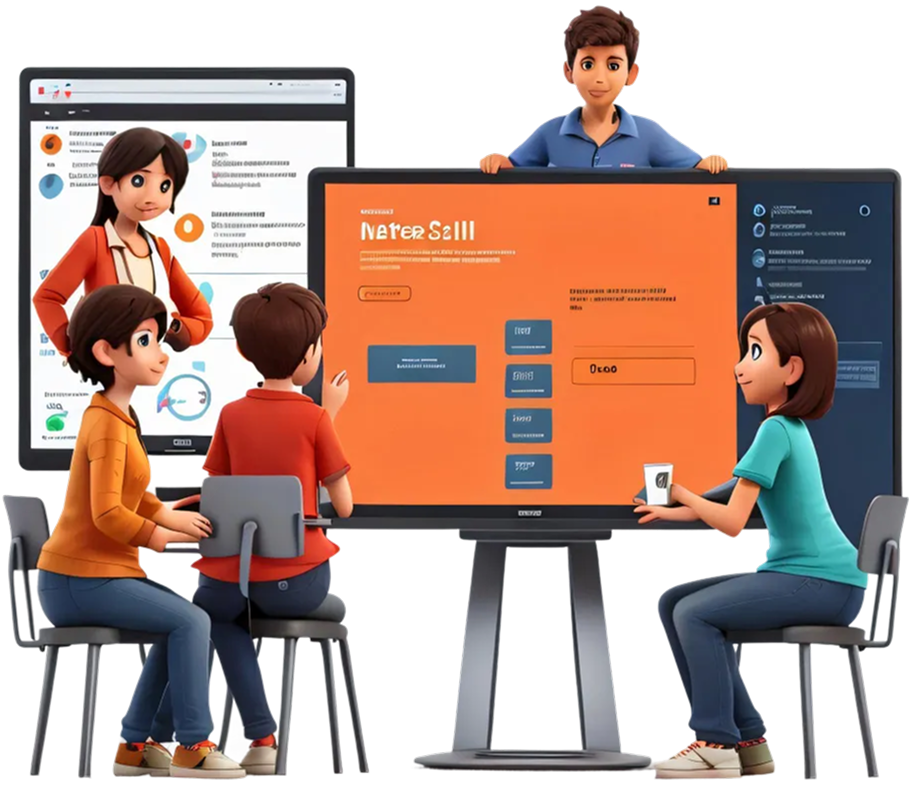
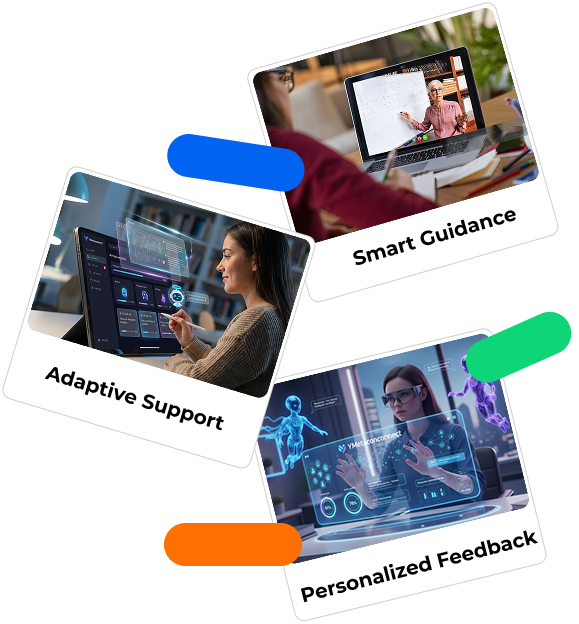
YMetaconnect makes worked examples more interactive, practical, and easier to apply through its learning tools and guided process. Here’s how YMetaconnect supports this method:

  • Method Selection by RAR AI

    When procedural or complex content is uploaded, YMetaconnect’s RAR AI reviews the material along with learner inputs. Based on content type, difficulty level, learning style, and language proficiency, it selects worked examples as the most suitable method.

  • Automatic Step-by-Step Example Generation

    Once the method is chosen, RAR AI analyzes the content and creates a step-by-step worked example. This clearly demonstrates the solution process, breaking complex procedures into manageable, easy-to-follow steps for the learner.

  • Understanding the Method Choice

    Along with the worked example, RAR AI explains why this method was selected for that content. Learners understand when and how to use worked examples effectively, helping them internalize procedural knowledge.

  • Applying the Worked Example

    The generated example serves as a foundation for individual and group activities, such as problem-solving tasks, practice exercises, and projects, allowing learners to apply concepts confidently.

  • Reflection for Skill Improvement

    Finally, AI guides learners through reflection. Learners review how they followed the worked example and identify ways to strengthen their procedural understanding, improving performance in future tasks.

Our Latest Blog

View all

Universal Design for Learning (UDL): Meaning, Principles, and Benefits

Walk into any classroom, and you will notice one thing immediately. Every student learns a little differently. Some students understand quickly through visuals. Others prefer...

YMetaconnect

19 Mar 2026
Read More

Effective Teaching Strategies & Techniques

Think about the teachers you remember the most. Chances are, they were not just explaining lessons from a book. They made the class interesting by...

YMetaconnect

19 Mar 2026
Read More

CBSE vs ICSE vs State Board

Every parent has to go through a phase of confusion regarding which board to choose for their child: CBSE, ICSE, or State Board. Initially, it...

YMetaconnect

17 Mar 2026
Read More

Kinesthetic Learning Style: Definition, Key Characteristics, and Benefits

Have you ever noticed that there are students who don’t seem to understand something until they try it out? They may be distracted during the...

YMetaconnect

17 Mar 2026
Read More