Debate:
Where Thinking Meets Speaking

Step into debate and make your voice heard. Research topics, work in teams, and defend ideas through structured discussion. Sharpen your thinking, build confidence, reflect, improve, and grow.

Try for Free

What is a Debate Activity?

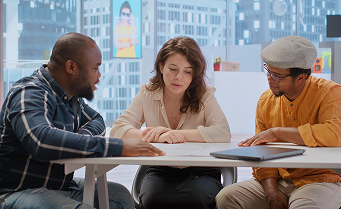
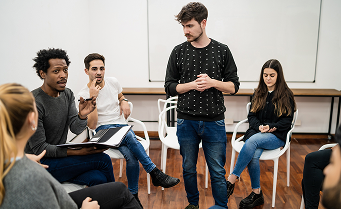
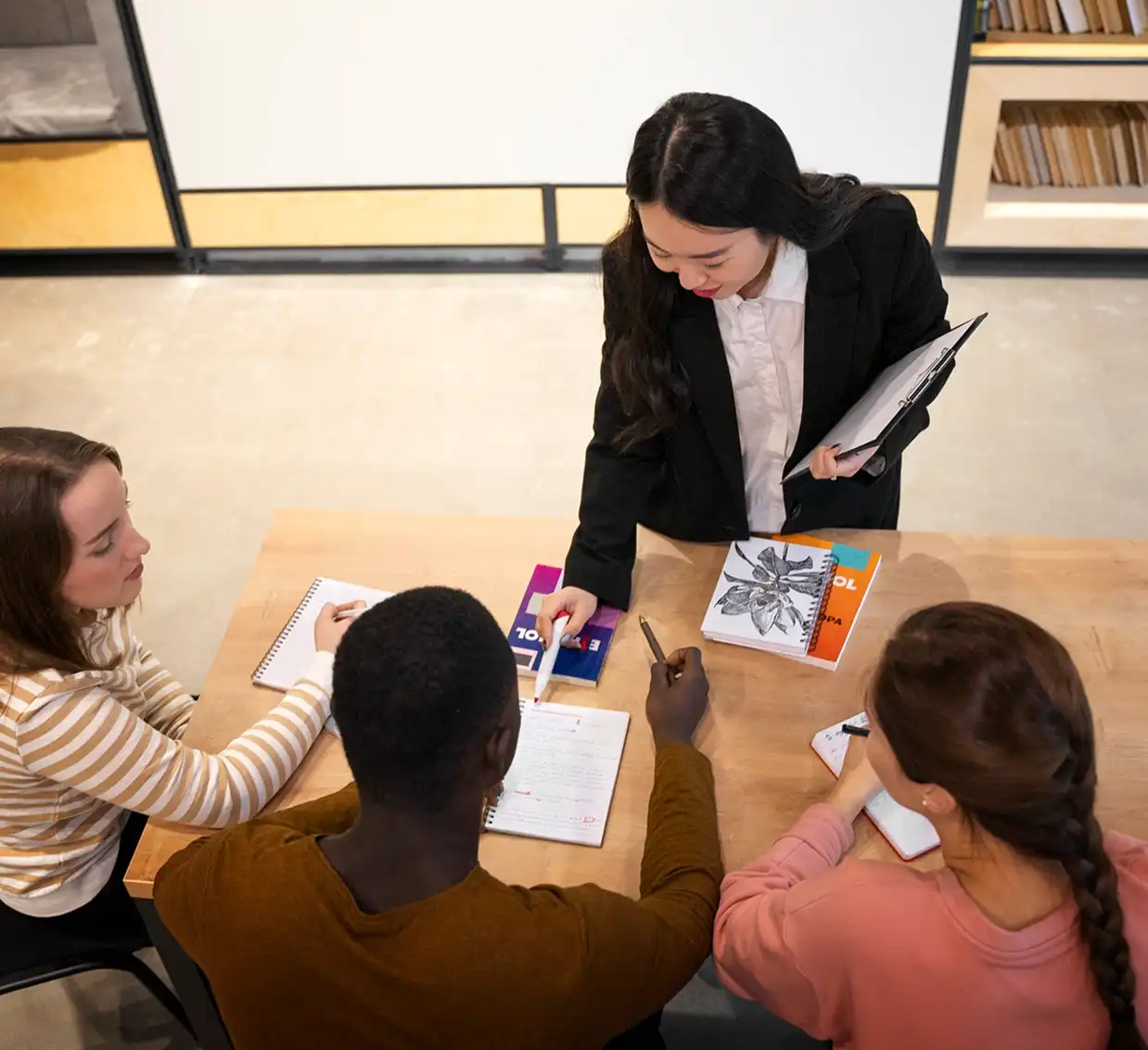
Debate is a learning activity that is carried out by grouping students to analyze different perspectives concerning a subject. The group debate is a learning process whereby learners investigate and offer arguments, as well as react to opposing presentations. The debate feedback is essential, as it aids students in analyzing their performance, enhances reasoning, and boosts communication.

Try for Free

How Does the Debate Activity Enhance Learning?

The Classroom Debate activity helps learners think critically, communicate confidently, and collaborate effectively. Here is how it enhances learning:

Boosts Critical Thinking

Learners evaluate evidence, anticipate challenges, and think on their feet. They analyze arguments, question assumptions, and make reasoned judgments during live discussions.

Enhances Communication

Participants practice clear, persuasive, and structured speaking. Debates improve articulation, listening skills, and the ability to respond thoughtfully under pressure.

Builds Confidence

Speaking in front of peers develops public speaking skills and self-assurance. Repeated participation helps students express ideas confidently and handle differing opinions calmly.

Encourages Perspective-Taking

Learners engage with multiple sides of complex issues. Defending or understanding opposing views broadens thinking and promotes respectful dialogue.

Improves Reflection

Post-debate discussions and debate feedback help learners review strengths, identify gaps, and improve future performance, strengthening long-term learning.

Skills Developed Through This Activity

The Classroom Debate activity helps learners develop essential skills for learning and life. Key skills developed by this activity include:

  • Critical Thinking & Analytical Skills

    Evaluate arguments, analyze evidence, and make informed judgments during discussions.

  • Communication

    Present ideas clearly, persuasively, and respectfully while responding to counter-arguments.

  • Problem-Solving & Anticipatory Thinking

    Predict opposing viewpoints, adapt strategies, and respond effectively in real time.

  • Leadership & Teamwork

    Take initiative, guide group discussions, and collaborate with peers toward shared goals.

  • Research Aptitude, Evaluation & Judgement

    Gather reliable information, assess its validity, and use it ethically to support arguments.

How does YMetaconnect Support This Activity?

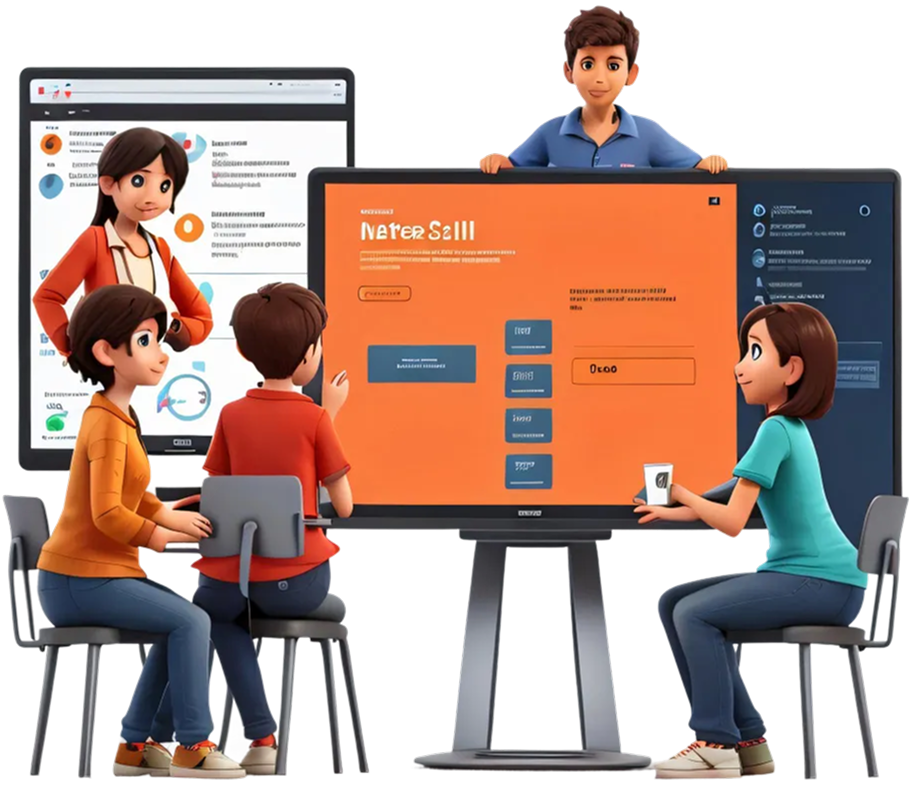
YMetaconnect strengthens debate and group debate activities by guiding learners through preparation, participation, and reflection. Here’s how YMetaconnect supports this activity:

  • RAR AI’s Customized Activity Selection

    Debate activities are recommended by YMetaconnect’s R-A-R AI tool based on topic complexity, learner readiness, content goals, and skill focus, ensuring meaningful engagement.

  • Structured Debate Preparation

    Learners receive guided prompts, research tasks, and planning frameworks to build arguments, anticipate counterpoints, and organize team strategies effectively.

  • In-Session Debate and Collaboration

    During the debate, learners present arguments, respond to challenges, and collaborate with teammates. This promotes active learning, confidence, and real-time critical thinking.

  • Monitoring and Evaluation of Skills

    AI tracks participation, communication clarity, reasoning quality, teamwork, and leadership. Learners receive AI-generated debate feedback highlighting strengths and areas for improvement.

  • Reflection and Improvement

    After the debate, learners engage in structured reflection. They review arguments, teamwork, and feedback to improve future debate performance and build lifelong learning habits.

Fequently asked questions

Yes, debate can be used across subjects like science, social studies, language, ethics, and business. Any topic with opinions, decisions, or problem-solving elements works well for debate.

Debate helps learners think deeply, question ideas, and understand multiple perspectives. It encourages active participation, improves reasoning, and builds confidence, making learning more meaningful and long-lasting.

Debate develops critical thinking, communication, analytical skills, problem-solving, leadership, teamwork, research aptitude, evaluation, judgment, creativity, and confidence needed for academic and real-life situations.

Classroom Debate follows a clear structure with rules, roles, and time limits. Students must support ideas with evidence, listen carefully, and respond thoughtfully, leading to deeper and more focused learning.

Group Debate encourages students to research together, plan arguments, divide roles, and support one another. Working as a team builds cooperation, leadership, shared responsibility, and respect for different ideas.

Our Latest Blog

View all

Universal Design for Learning (UDL): Meaning, Principles, and Benefits

Walk into any classroom, and you will notice one thing immediately. Every student learns a little differently. Some students understand quickly through visuals. Others prefer...

YMetaconnect

19 Mar 2026
Read More

Effective Teaching Strategies & Techniques

Think about the teachers you remember the most. Chances are, they were not just explaining lessons from a book. They made the class interesting by...

YMetaconnect

19 Mar 2026
Read More

CBSE vs ICSE vs State Board

Every parent has to go through a phase of confusion regarding which board to choose for their child: CBSE, ICSE, or State Board. Initially, it...

YMetaconnect

17 Mar 2026
Read More

Kinesthetic Learning Style: Definition, Key Characteristics, and Benefits

Have you ever noticed that there are students who don’t seem to understand something until they try it out? They may be distracted during the...

YMetaconnect

17 Mar 2026
Read More