Group Discussion:
Share Your Views, Shape Your Thinking

Step into fast-paced group discussions where ideas are shared, challenged, and refined. Speak with confidence, listen actively, and sharpen thinking through real conversation, not silent classrooms.

Try for Free

What is a Group Discussion Activity?

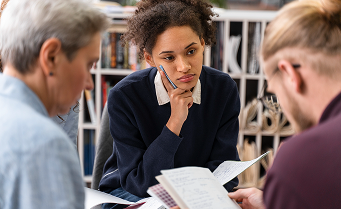
Group discussion is a learning activity that involves the exchange of ideas and discussions among participants based on a selected topic. Group discussion topics could range from social topics, technology, education, values, and the environment. The modes of fun group activity can be free flow, round robin, and roles, including the moderator.

Try for Free

How Does the Group Discussion Activity Enhance Learning?

The group discussion techniques help learners think critically, communicate effectively, and collaborate actively. Here is how it enhances learning:

Improves Communication Skills

Learners clearly express their ideas and actively listen to their peers during discussions, adding weight to verbal expression and active listening.

Encourages Critical Thinking

Engagement with diverse perspectives nudges learners to question assumptions, analyze evidence, and construct reasoned conclusions.

Encourages Collaboration

Teamwork-based dialogue instills respect, solves problems in cooperation, and develops workgroup discussion techniques effectively.

Builds Confidence

Regular discussions enhance clarity, self-expression, and speaking skills, thus enabling learners to make contributions with confidence.

Develops Analytical Ability

Learners judge evidence, weigh different perspectives, and reflect on their reasoning and contributions after the session.

Skills Developed Through This Activity

Activities for groups help learners build essential skills for learning and life. Key skills developed by this activity include:

  • Critical Thinking & Analytical Skills

    The ability to analyze different viewpoints and examine arguments.

  • Communication

    Communicate ideas clearly, listen actively, and respond constructively.

  • Collaboration & Teamwork

    Engage effectively with others to work well as a team.

  • Problem Solving & Anticipatory Thinking

    Anticipate problems and work with others to identify options and find solutions.

  • Creativity & Innovation

    Learn to view things differently, develop ideas, and think innovatively.

How does YMetaconnect Support This Activity?

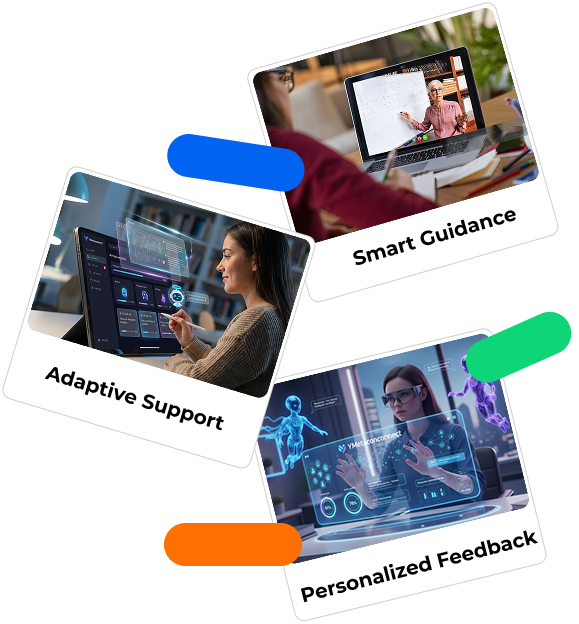
YMetaconnect strengthens group activities for kids by providing a structured framework for preparation, discussion, and reflection. Here’s how YMetaconnect supports this activity:

  • RAR AI’s Customized Activity Selection

    The Group Discussion Activity is recommended by YMetaconnect’s R-A-R AI tool based on the topic, learner readiness, content type, and skill focus. This ensures discussions are aligned with learning objectives and skill development goals.

  • Structured Preparation

    Learners prepare by reviewing prompts, reflecting, and noting ideas before participating. Reflection tasks help organize thoughts for effective contributions.

  • In-Session Collaboration and Observation

    During discussions, participants actively share ideas while observers provide constructive feedback. The strategy promotes small group discussion, teamwork, and analytical thinking.

  • Monitoring and Evaluation of Skills

    AI tracks engagement, communication quality, observation, and participation. Learners receive AI-generated feedback highlighting growth in critical skills and collaborative abilities.

  • Reflection and Improvement

    AI guides learners through reflection loops. Students review their contributions, reflect on peers’ ideas, and identify ways to improve discussion, reasoning, and collaboration in activities for groups.

Fequently asked questions

Students can track progress through reflection, peer feedback, or AI tools. These methods help them see how well they communicate, work in teams, think critically, and improve for future discussions.

Group discussions focus on sharing ideas and understanding different viewpoints rather than winning in debates. Students listen, explore opinions, and work together to reach a common understanding or solution.

Yes. You can add points, mini-challenges, or scenario tasks to make discussions more fun and interactive. This helps learners stay motivated, think creatively, and contribute actively to the group.

Short discussions keep students active and focused, while longer ones give time for deeper thinking. Clear time limits help everyone participate equally and make sure no one dominates the conversation.

Topics that allow open conversation and different opinions work best. Subjects like technology, ethics, the environment, or education help students share ideas, explore viewpoints, and learn from each other during discussions.

Our Latest Blog

View all

Mind Map Ideas for Students to Support Creative Thinking and Better Memory

Learning can be confusing when there are a lot of notes that are difficult to remember. Many students will read the same page over and...

YMetaconnect

05 Feb 2026
Read More

Growth vs Development in Children: What’s the Real Difference?

The terms "growth" and "development" are often used together. Many parents believe that these terms are the same thing. They are not. Growth and development...

YMetaconnect

05 Feb 2026
Read More

Personality Development: Meaning, Types, and Key Factors

Why do two people act differently in the same situation? The answer to this question is often found in the development of personality. Personality affects...

YMetaconnect

05 Feb 2026
Read More

Co-Education in Schools: Positive and Negative Effects on Students

Have you ever wondered how learning alongside both boys and girls impacts students? Co-education is a common system in schools worldwide, but it comes with...

YMetaconnect

05 Feb 2026
Read More