Observe, Listen, Learn:
The Power of Modeling & Think-Alouds

Learn smarter with modeling & think alouds, watching strategies unfold, and hearing the thought process behind each step. This method helps learners understand concepts clearly, make better decisions, and solve problems confidently.

Try for Free

What Is the Modeling & Aloud Thinking
Method?

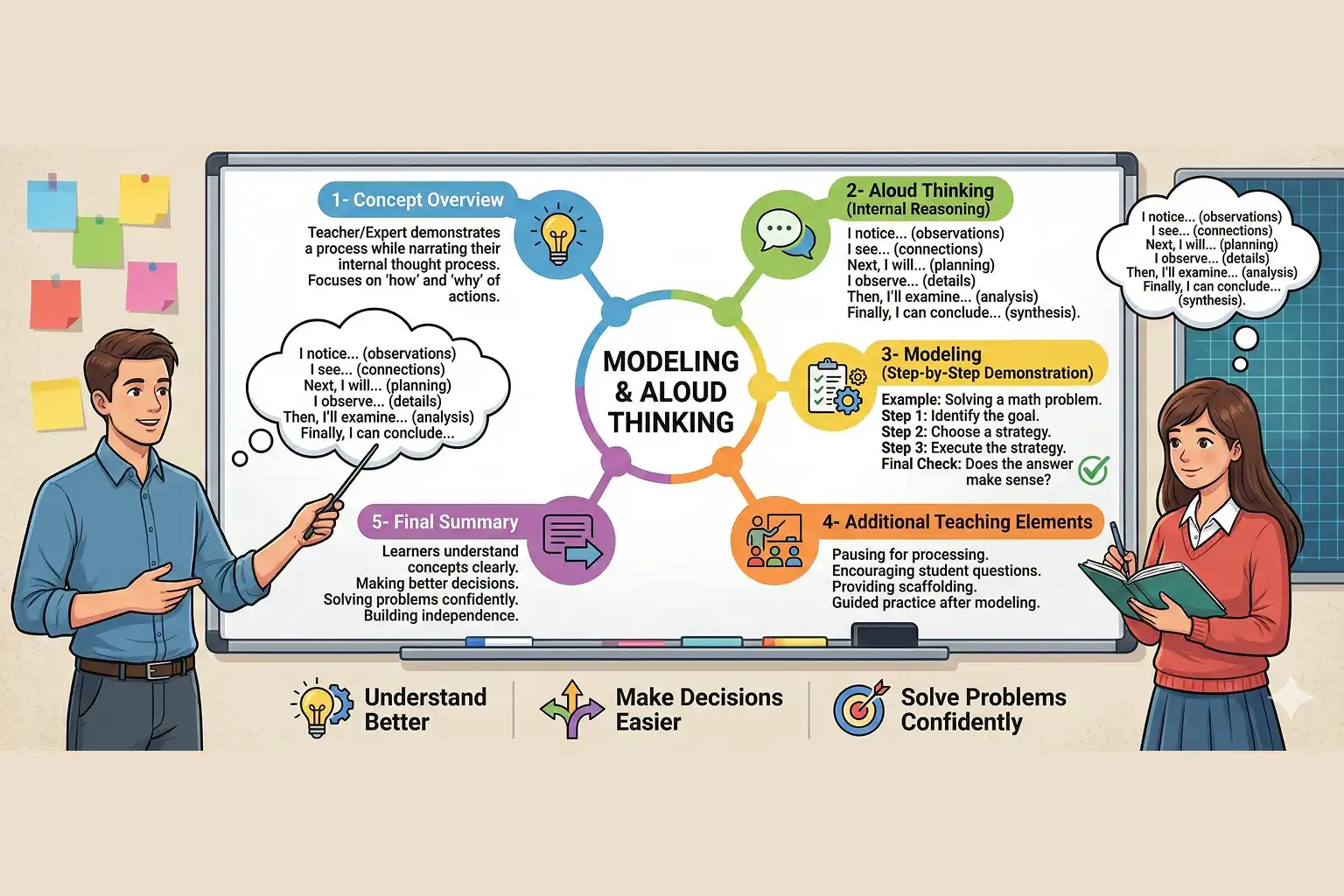
Modeling & Aloud Thinking, also called think aloud, is a learning method where teachers, mentors, or experts solve problems or explain concepts step by step while verbalizing their thought process. This method is especially useful when learning mathematics, programming, science experiments, essay writing, or other complex tasks.

Try for Free

How Modeling & Aloud Thinking Boosts Learning?

Watching live modeling or listening to thinking-aloud sessions improves comprehension, problem-solving, and independent thinking. Key benefits include:

Reveals Hidden Thinking Processes

Learners often struggle because expert strategies are not visible. Think aloud sessions expose reasoning steps, helping students adopt similar approaches.

Improves Problem-Solving Skills

By observing reasoning and decision-making, learners understand the steps behind solutions, which prepares them to tackle new problems confidently.

Encourages Active Learning

Students can pause, ask questions, or predict the next step during aloud thinking sessions, engaging more deeply than passive observation.

Reduces Errors and Misconceptions

Hearing experts explain their choices aloud helps learners recognize potential mistakes and learn strategies to avoid them.

Boosts Confidence and Independence

Seeing how professionals think allows students to imitate expert thought patterns, building confidence to solve unfamiliar problems independently.

Supports Communication Skills

Modeling & aloud thinking teach learners to articulate reasoning clearly, improving teamwork, presentations, and professional discussions.

How Does the Modeling & Aloud Thinking Method Works?

This method works by demonstrating live modeling and verbalizing thought processes (think aloud). Here’s how it works:

  • Select the Task or Concept

    Choose a concept, problem, or skill learners need to understand.

  • Demonstrate While Thinking Aloud

    Perform the task step by step while explaining reasoning, strategies, and decisions.

  • Encourage Observation

    Learners observe both actions and reasoning to understand the thought process.

  • Discuss and Reflect

    After the session, students discuss what they observed, ask questions, and reflect on strategies used.

  • Practice Independently

    Learners apply the same strategies on similar tasks, gradually reducing dependence on modeling.

How YMetaconnect Enhances This Learning Method

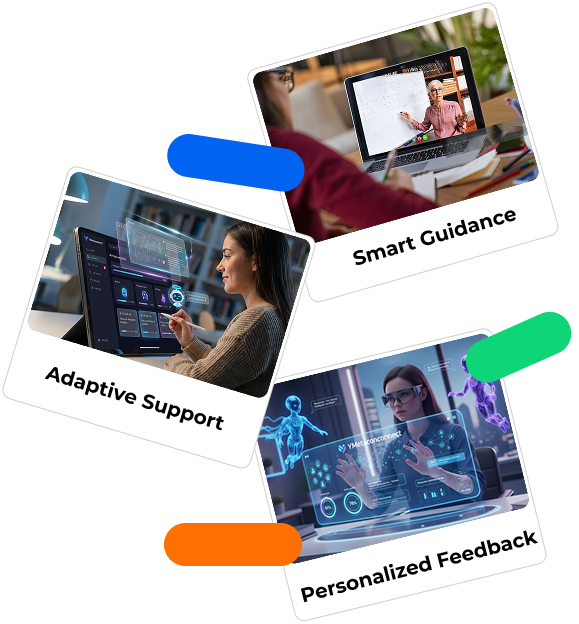
YMetaconnect strengthens modeling & aloud thinking through structured tools, guided practice, and feedback. Here’s how YMetaconnect supports this method:

  • Method Selection by RAR AI

    When complex problem-solving content is uploaded, YMetaconnect’s RAR AI reviews the material along with learner inputs. Based on content type, difficulty level, learning style, and language proficiency, it chooses modeling and aloud thinking as the most suitable method.

  • Automatic Thinking-Aloud Modeling

    Once selected, RAR AI analyzes the content and models the thinking process aloud. Each step of reasoning is verbalized clearly, helping learners follow how decisions are made and problems are solved.

  • Understanding the Method Choice

    Along with the modeled explanation, RAR AI explains why aloud thinking and modeling were chosen for that content. This helps learners understand when this strategy is most useful and how it supports problem-solving.

  • Applying the Modeled Thinking

    The demonstrated thinking process becomes a foundation for individual and group activities such as peer teaching, role plays, and collaborative problem-solving tasks.

  • Reflection for Metacognitive Growth

    Finally, AI encourages learners to reflect on how they used aloud thinking, helping them strengthen their metacognitive awareness and ability to explain their reasoning more clearly.

Our Latest Blog

View all

What are the Benefits of the Internet for Students?

The internet has changed how students learn, think, and grow. Learning is no longer limited to classrooms or textbooks. With a phone or computer, students...

Read More

What Are the Key Benefits of Learning English?

English is more than just a subject taught in school. It is a life skill that opens doors in education, work, and daily communication. From...

Read More

What Does Curriculum Mean in Education? Types, Purpose, and Impact

Education does not happen by chance. Behind every lesson, activity, and assessment, there is a clear plan. That plan is called the education curriculum. It...

Read More

10 Powerful Benefits of Reading Books for Knowledge and Personal Growth

The impact of books on our lives is a major one. Books do not raise their voices to attract attention, but they always leave a...

Read More

What are the Benefits of the Internet for Students?

The internet has changed how students learn, think, and grow. Learning is no longer limited to classrooms or textbooks. With a phone or computer, students...

YMetaconnect

28 Jan 2026
Read More

What Are the Key Benefits of Learning English?

English is more than just a subject taught in school. It is a life skill that opens doors in education, work, and daily communication. From...

YMetaconnect

28 Jan 2026
Read More

What Does Curriculum Mean in Education? Types, Purpose, and Impact

Education does not happen by chance. Behind every lesson, activity, and assessment, there is a clear plan. That plan is called the education curriculum. It...

YMetaconnect

28 Jan 2026
Read More

10 Powerful Benefits of Reading Books for Knowledge and Personal Growth

The impact of books on our lives is a major one. Books do not raise their voices to attract attention, but they always leave a...

YMetaconnect

28 Jan 2026
Read More