Summarizing:
A Smart Learning Method 

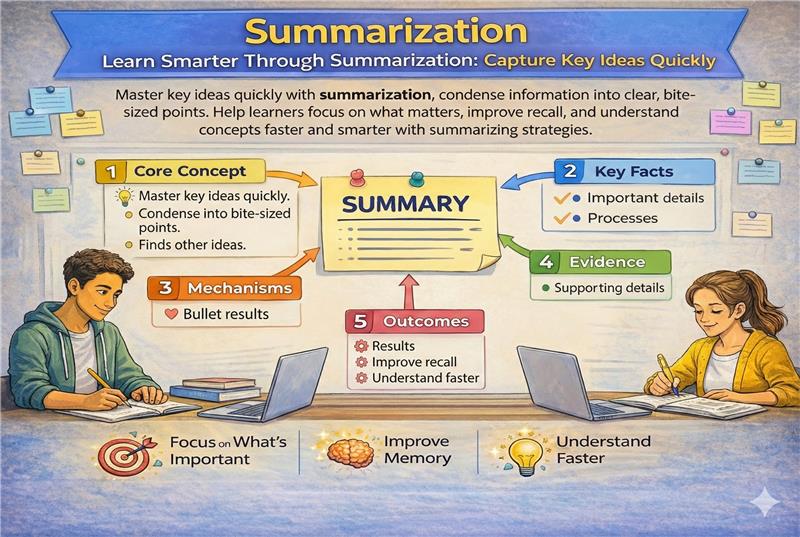
This method condenses large amounts of information into short, meaningful points. It helps learners focus on the core ideas and recall them quickly.

Summarizing is one of the most powerful and widely used learning methods. It simply means condensing a large amount of information into shorter, meaningful points. Instead of trying to memorize entire chapters or long notes, learners focus on the core ideas, main arguments, and key details. By doing this, the brain organizes and stores information in a way that is easier to understand, remember, and recall later.

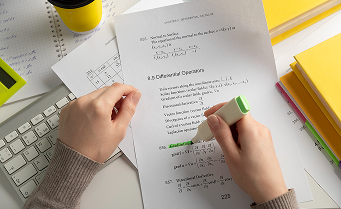
In the context of education, summarizing is more than just writing shorter notes. It is about identifying the essence of knowledge. This process pushes learners to think actively, ask themselves “What is the main point here?” and then phrases that point in their own words. This active engagement makes learning deeper and smarter compared to simply highlighting or rereading text.

Benefits of Summarizing

Summarizing is not just about saving time; it transforms the way students and professionals learn.
Let’s look at the key benefits of the summarizing learning method:

Better Understanding of Content

When learners summarize, they actively think about the meaning of the material. Instead of copying text, they interpret it. This improves comprehension and ensures that learners actually understand the subject.

Improves Memory Retention

Short summaries are easier to remember than long paragraphs. By writing the key points in their own words, learners create personalized notes that are more memorable.

Focus on Important Information

Not every detail is equally important. Summarizing trains learners to filter out irrelevant details and highlight the main ideas. This skill is useful not only in academics but also in workplace tasks where prioritization is crucial.

Saves Study Time

Instead of going through entire textbooks again and again, summaries provide a quick reference for revision. This makes exam preparation faster and more effective.

Improves Writing and Communication Skills

Summarizing teaches learners how to express big ideas in a clear and concise manner. This skill is highly valued in professional life, where effective communication is essential.

Encourages Critical Thinking

Summarizing is not passive, it requires analysis and decision-making. Learners must identify what is essential, which develops their critical thinking abilities.

How YMetaconnect Supports Summarizing?

At YMetaconnect, summarizing is not treated as just a study tip, it is built into the RAR (Review–Action–Reflection) learning framework.
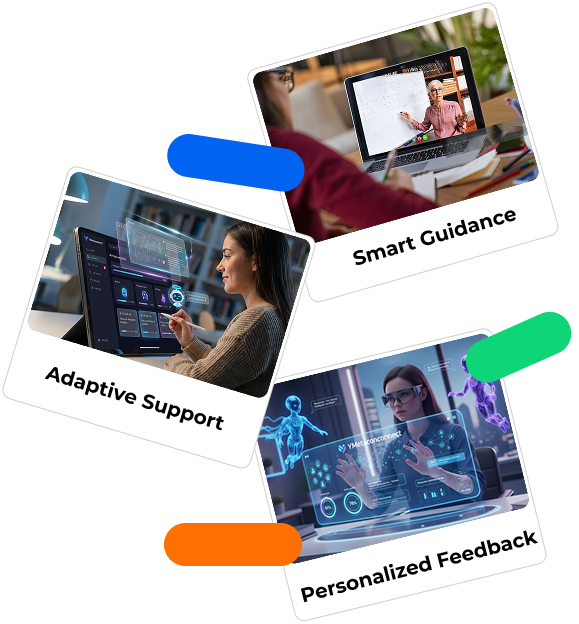
The platform makes this technique practical, interactive, and easy to apply for learners at every level.

Here’s how YMetaconnect helps students use the summarizing learning method in real life:

Guided Outlining with RAR Tool

The RAR tool allows learners to upload study material, review it, and then practice summarizing key points. Instead of passively reading, learners engage in activities where they condense chapters, notes, or lecture content into smaller summaries.

Peer Learning and Feedback

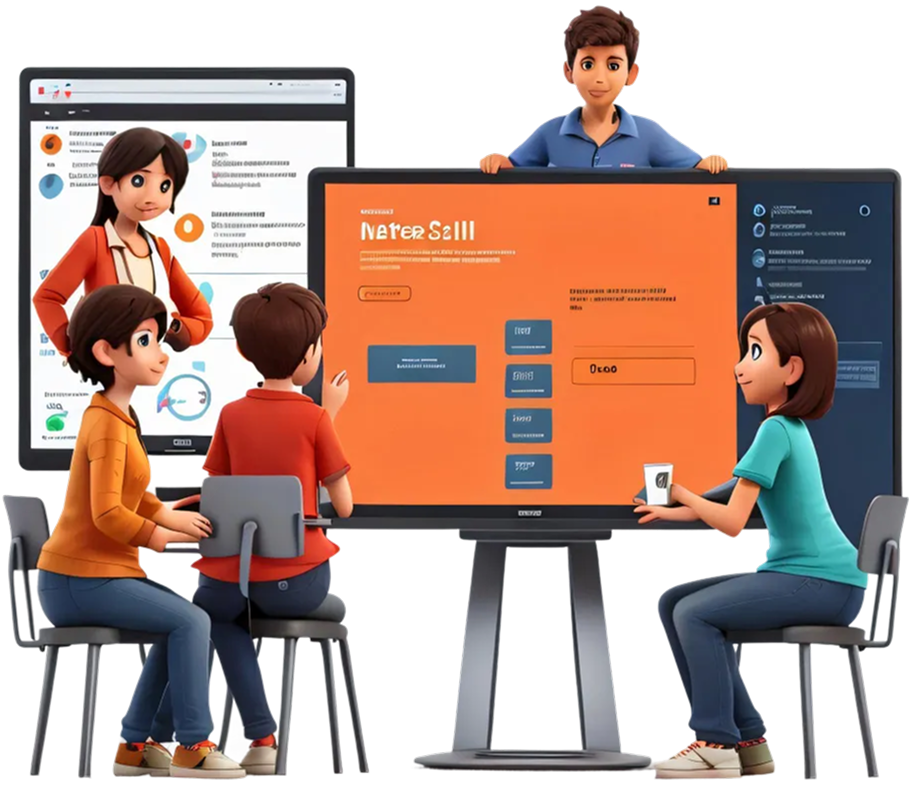
Since YMetaconnect is also a community-based learning platform, students can share their summaries with peers. This creates an opportunity for peer feedback, where learners refine their skills by comparing different ways of condensing the same content.

Real-World Application

YMetaconnect ensures that summarizing is not limited to academic study. For workplace skills and professional training, learners are encouraged to create summary sheets, checklists, or briefs. These tasks mirror how professionals use summarizing in real projects.

Our Latest Blog

View all

What Is Rote Learning? A Simple Guide for Students

If you've ever crammed for an exam or memorized multiplication tables, then you've practiced rote learning. Many students depend on it to remember facts in...

YMetaconnect

03 Dec 2025
Read More

Learning Methods vs Activities: What Students Actually Need for Deep Learning

Many students spend long hours studying, but forget lessons after exams. The reason is not a lack of effort. It’s the way they learn. Some...

YMetaconnect

17 Nov 2025
Read More

25 Interactive Group Activities That Make Complex Concepts Easy to Learn

Learning doesn’t have to be silent or solo. Group activities for students help them explore ideas together, share viewpoints, and make complex topics easier to...

YMetaconnect

17 Nov 2025
Read More

15 Powerful Individual Learning Activities Every Student Should Practice

Learning becomes stronger when students do it on their own. It helps them think, recall, and grow in simple yet powerful ways. Today’s students need...

YMetaconnect

17 Nov 2025
Read More

What Is Rote Learning? A Simple Guide for Students

If you've ever crammed for an exam or memorized multiplication tables, then you've practiced rote learning. Many students depend on it to remember facts in...

YMetaconnect

03 Dec 2025
Read More

Learning Methods vs Activities: What Students Actually Need for Deep Learning

Many students spend long hours studying, but forget lessons after exams. The reason is not a lack of effort. It’s the way they learn. Some...

YMetaconnect

17 Nov 2025
Read More

25 Interactive Group Activities That Make Complex Concepts Easy to Learn

Learning doesn’t have to be silent or solo. Group activities for students help them explore ideas together, share viewpoints, and make complex topics easier to...

YMetaconnect

17 Nov 2025
Read More

15 Powerful Individual Learning Activities Every Student Should Practice

Learning becomes stronger when students do it on their own. It helps them think, recall, and grow in simple yet powerful ways. Today’s students need...

YMetaconnect

17 Nov 2025
Read More