21 January 2026
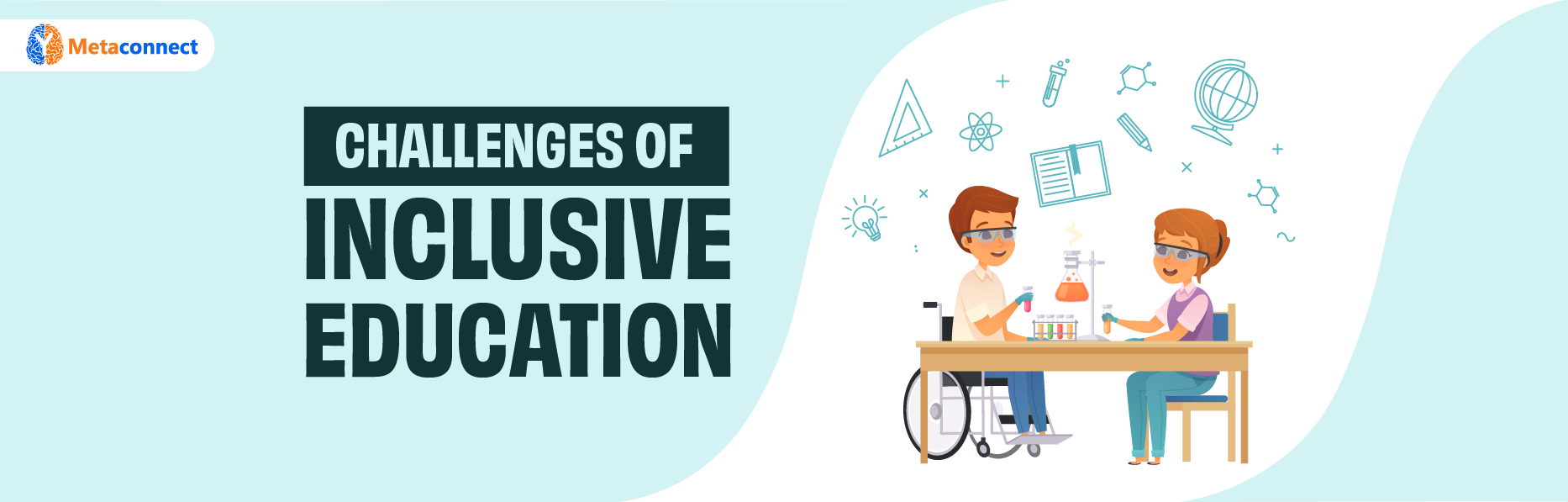
What Are the Challenges of Inclusive Education in Today’s Schools?
The classroom should feel like a place where each student belongs. However, for a great majority of students, it may look like a place that was not made for them. Inclusive education aims to offer equality in terms of education for all learners by ensuring fairness and dignity in education.
The vision is straightforward, but the reality is more complicated. Educators must coordinate with diverse requirements. Educational institutions are faced with a lack of resources, time, and equipment. Parents hold hopes for inclusiveness, yet there can be gaps between promises and implementation. That’s where most difficulties happen.
Understanding barriers to inclusive education helps schools move from intention to action. Only then can inclusion become a lived experience, not just a policy goal.
This blog explains the issues of inclusive education. Let’s understand it in detail.
What is Inclusive Education?
Inclusive education refers to teaching all students in regular class settings despite their physical, learning, and social requirements. It embraces diversity and looks at the differences as part of the normal process of learning.
Students with disabilities are educated together with their peers. Assistance provided is modified depending on the requirements of the students. The scope of inclusive education aims at participation, increasing access, and development. It asks the educational institutions to make their practices favorable for the participation of all students.
It is also supportive of being respectful of others, empathetic towards others, and taking joint responsibility. If implemented in the right manner, it makes students feel mattered. It is not about lowering standards. It is about offering fair opportunities to succeed through flexible teaching approaches, self-paced microlearning activities, and shared learning spaces.
Why Is Inclusive Education Harder Than It Looks?
The need of inclusive education seems fair and promising on paper. In a classroom, the task gets more challenging and complex.
Teachers often enter the classroom with less knowledge about how to include students with different requirements. They may strongly desire but be unsure about how to include students with different needs simultaneously.
Every student is unique in how he or she learns information. Meeting all learning paces, behaviors, and special needs in one classroom is no easy task. Even experienced teachers can feel overwhelmed, especially without classroom assistants or access to collaborative classroom activities that distribute learning responsibility among students.
Barriers That Hinder Inclusive Learning Environments
Inclusive education comes with lots of challenges. Let’s look at the challenges of inclusive education in detail.
1. Lack of Proper Training
Teacher training includes general teaching methods. Strategies for inclusion are not emphasized much. Educators are not taught much about how to accommodate their teaching, how to cope with different behaviors, or how to use supportive tools. When difficulties arise, they end up doing things by trial and error. Such may impact their confidence and class balance. Continuous training will help teachers to respond with skill rather than guesswork.
2. Insufficient Support Staff
Inclusive classrooms require assistance from more than just the classroom teacher. Special educators and support staff contribute largely towards this end. However, in most schools, these people are scarce or reach many classes in various schools. If support staff are overallocated, students don’t receive immediate assistance. Teachers will also lack the support they need for modifications in the lessons.
3. Rigid Curriculum Structure
Often, many school systems have fixed curricula and time constraints. These structures leave little room for flexible pacing or varied learning styles. This presents issues when some students need more time. They wind up falling behind. The necessity to continue teaching is difficult when students have not fully comprehended. Inclusion in education requires adaptability.
4. Assessment Challenges
Standard tests measure progress in narrow ways. They often fail to reflect real learning growth for diverse students. This makes inclusive education challenges more visible during evaluations. Teachers struggle to balance fairness with system demands. Students may feel labeled by scores that do not reflect effort or ability. Using varied individual assessment methods, such as projects, observations, and practical tasks, creates fairer outcomes.
5. Limited Resources and Tools
Inclusive classrooms require equipment like visual aids, learning applications, adaptable furniture, and assistive technology. Many learning institutions operate without funding for these facilities. This means that the instructor is left with no option but to utilize their own creativity instead of investing in equipment infrastructure. This is a challenge because no amount of effort compensates for equipment shortcomings.
6. Physical Accessibility Issues
School facilities are not always considered for mobility and sensory requirements. The doorway might be narrow, and the stairs, lighting, or environment might be very loud. For instance, if the mobility within schools is a concern, students might face difficulties in movement. When students cannot move freely or feel safe, learning suffers. Inclusion begins with physical access. Without it, participation remains partial.
7. Communication Gaps
Clear communication between teachers and families with specialists is essential. When parents feel like they are not being heard, and teachers may be unaware of exactly what students require, things can break down. Practices like structured peer interaction and collaborative planning help create shared understanding and consistent support.
8. Time Constraints
Inclusive planning takes time. The role of teacher in inclusive education includes the requirement of space to design lessons, adjust materials, and reflect on outcomes. Heavy workloads leave little room for this work. When time is limited, inclusion becomes rushed. Thoughtful planning needs protected time within school schedules.
Conclusion
Inclusive education is not a simple switch. It is a shared effort that asks schools to rethink teaching, support, and mindset. The problems of inclusive education are real, but they are not fixed. With proper training, teamwork, and flexible systems, inclusion can grow stronger each year.
Schools that listen, adapt, and invest create spaces where every learner feels welcome. Inclusion benefits all students by teaching empathy, patience, and cooperation. It builds classrooms that reflect real life.
Progress begins with honest awareness of barriers and steady action to remove them. When inclusion is treated as a daily practice rather than a policy goal, schools move closer to fairness and belonging for every child.



 Jumpstart Journal
 R-A-R Activity
 Critical Thinking Exercise
 Picture Reflection Or Photo Caption
 Presentation
 Thematic Apperception Test (TAT)
 Flash Card
 Micro Learning
 Research Skills
 Workshop Report Presentation
 MCQ And Descriptive Questions
 Video Analysis Presentation
 Scenario Planning
 Problem Solving
 Trivia Quiz
 Flipped Classroom
 Generative Knowledge Interviewing
 Think-Pair-Share
 Fish Bowl Group Activity
 Jigsaw Method
 Simulation
 Peer Interview
 Role Play
 Debate
 Group Discussion
 Futurism And Trend Analysis
 Report Presentation
 Assignment Presentation
 Research Article Review Presentation
 Peer Teaching
 Industrial Visit Report Presentation
 Video Podcast
 Games
Games
 Business Games
 Collaborative Project
 Team Building
 Role Reversal
 Leadership Activity
 Pitch Deck
 Case Analysis Presentation


 Learner
 Mentor
 Organisation
 Learner
 Mentor
 Organisation