20 May 2026
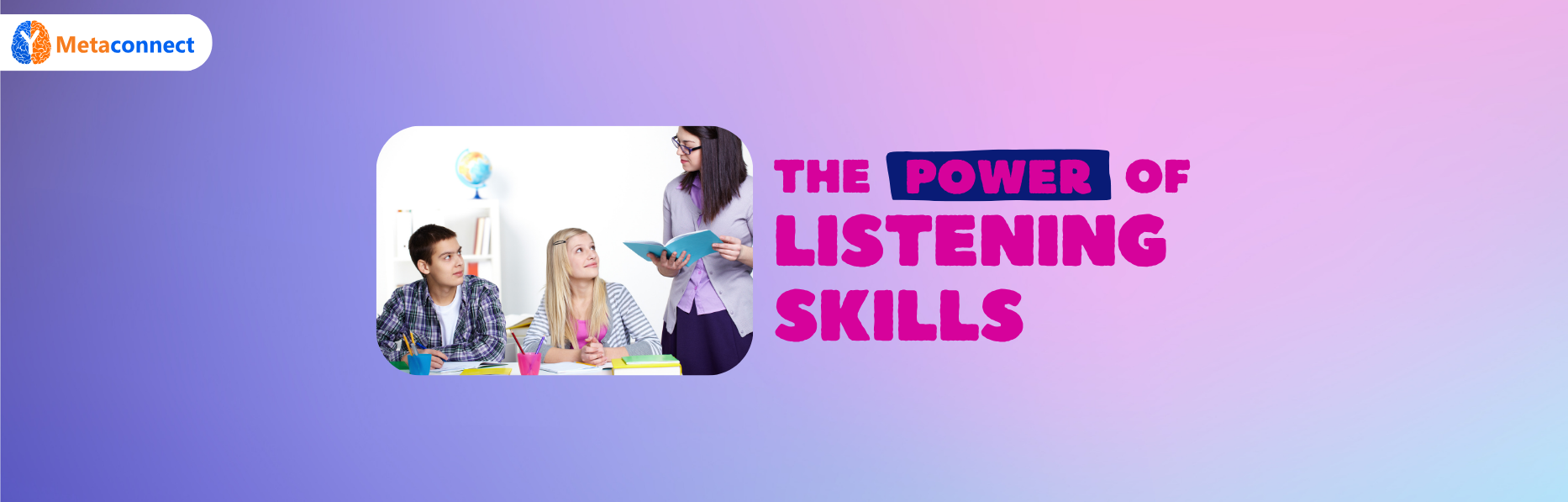
The Power of Listening Skills: Types, Benefits, and Improvement Steps
Is there a time when you have been part of a discussion only to realize later that you actually understood very little of what was being discussed? Such instances occur frequently in our lives.
Listening is not just about keeping quiet while the other person speaks. It is about comprehending the discussion, analyzing it, and participating in it with complete attention. Additionally, good listening skills can help build better relationships, facilitate learning, and make decisions more effectively.
It is generally believed that many people regard themselves as good listeners. But listening goes beyond hearing what the other person is saying.
In this guide, let us understand what is listening skill, and understand the process stage by stage.
What are Listening Skills?
The skills of listening include focusing one’s attention on receiving, understanding, interpreting, and replying to spoken words.
It includes understanding the meaning of what is being said and replying accordingly. To explain listening skills, they are the abilities that help a person receive, understand, interpret, and respond to spoken communication properly.
Good listening skills entail that one should focus not just on the words being spoken but on other things as well, such as tone and mood.
One must have good listening skills in different areas, which include schools, business organizations, and our personal lives.
➢ Listening Skills in Communication
Listening is essential in human interaction. Without listening, effective interaction cannot be achieved.
Before the message recipient can respond, he/she must fully comprehend the message. This is the place where listening plays its part.
Effective listening facilitates clear conversations and communication skills. It also makes speakers feel valued, thus promoting understanding and building relationships.
The listening process in communication also helps improve teamwork and collaboration. In group discussions, listening carefully allows people to understand different viewpoints and respond appropriately.
Difference Between Hearing and Listening
Before we proceed, we need to take note that hearing and listening are not synonymous.
Hearing is just a natural process, which involves the reception of sounds by our ears.
Listening, on the other hand, entails attention, since the purpose of listening is to gain comprehension of what was heard.
For instance, one can hear the lecture being delivered in a classroom setting, but the individual's mind may be wandering. But when a person listens, he understands and acts upon the received knowledge.
Steps Involved in Listening
Listening is not a single action. It occurs in a process consisting of several steps. These steps are as follows:
➢ Receiving
This is the stage where you physically hear the words spoken by the speaker. Reducing distractions is important here.
➢ Understanding
In this step, you try to understand the meaning of what is being said using language, tone, and context.
➢ Evaluating
Here, you think about the message and decide whether it is logical, relevant, or important.
➢ Remembering
Important points are stored in your memory so they can be used later when needed.
➢ Responding
Finally, you reply or give feedback to show that you have understood the message.
Types of Listening Skills
People listen differently depending on the situation and purpose. Understanding the types of listening skills helps improve communication in different environments.
➢ Active Listening
This involves full attention, engagement, and feedback while someone is speaking.
➢ Passive Listening
This is when you hear words without actively processing them deeply.
➢ Critical Listening
Here, you analyze and evaluate the message before accepting it.
➢ Empathetic Listening
This focuses on understanding emotions and feelings behind the message.
➢ Informational Listening
This type is used when the goal is to learn and understand new information.
Importance of Listening Skills
The importance of listening can be seen in almost every part of life. Good listening improves understanding, reduces mistakes, and strengthens communication. When done properly, it improves understanding and reduces confusion in both personal and professional situations.
➢ Education and Learning
Good listening helps students understand lessons clearly, follow instructions, and improve overall academic performance.
➢ Workplace Communication
At work, strong listening improves teamwork, reduces errors, and helps people coordinate tasks more effectively.
➢ Personal Relationships
In daily life, listening builds trust, reduces misunderstandings, and strengthens emotional connections with others.
➢ Leadership Roles
For leaders, listening helps understand team needs better and supports clearer, more informed decision-making.
Many people often ask why are listening skills important in daily life. The answer is simple. Effective listening improves communication, learning, relationships, and problem-solving abilities.
Activities to Improve Listening Skills
Listening skills improve with regular practice and simple, everyday activities. These exercises help train focus, attention, and understanding over time.
➢ Story Listening and Retelling
Listen to a story carefully and then try to explain it in your own words to improve attention and memory.
➢ Group Discussion Practice
Participating in group talks and group activities helps you understand different opinions and improves active listening.
➢ Listening and Summarizing
Listen to lectures or talks and quickly summarize key points to strengthen understanding.
➢ Following Spoken Instructions
Practicing step-by-step verbal instructions helps improve focus and response accuracy.
➢ Roleplay Exercises
Roleplay activities improve real-life communication and listening response skills.
➢ Note-Taking Practice
Writing key points while listening helps improve memory and clarity.
➢ Feedback-Based Learning
Giving and receiving feedback helps you understand messages more deeply.
Benefits of Good Listening Skills
Strong listening skills create a positive impact in almost every area of life. They help people understand information better and reduce unnecessary mistakes in communication. The benefits of effective listening are as follows:
➢ Better Understanding and Fewer Mistakes
Good listeners process information correctly, which reduces confusion and errors.
➢ Stronger Relationships
Listening improves trust, respect, and emotional bonding in personal and professional relationships.
➢ Improved Decision Making
A clear understanding of situations helps in making smarter and more confident decisions.
➢ Better Teamwork and Communication
Good listeners work more effectively in groups and handle conversations more smoothly.
➢ Give Proper Feedback
It is essential to give proper feedback. Nodding or responding briefly shows that you are actively listening.
➢ Practice Regularly
Regular conversations and active participation help improve listening naturally over time.
Conclusion
Listening is more than just a communication skill. It is a life skill that shapes how we understand people, learn new things, and respond in everyday conversations.
Once you start giving full attention instead of just hearing words, communication becomes clearer, and relationships naturally become stronger. Small changes in how you listen can completely improve the way you connect with others.
Whether it is studies, work, or personal life, strong listening skills always make a real difference. Start practicing active listening in your daily conversations, observe the change, and build stronger communication habits step-by-step.



 Jumpstart Journal
 R-A-R Activity
 Critical Thinking Exercise
 Picture Reflection Or Photo Caption
 Presentation
 Thematic Apperception Test (TAT)
 Flash Card
 Micro Learning
 Research Skills
 Workshop Report Presentation
 MCQ And Descriptive Questions
 Video Analysis Presentation
 Scenario Planning
 Problem Solving
 Trivia Quiz
 Flipped Classroom
 Generative Knowledge Interviewing
 Think-Pair-Share
 Fish Bowl Group Activity
 Jigsaw Method
 Simulation
 Peer Interview
 Role Play
 Debate
 Group Discussion
 Futurism And Trend Analysis
 Report Presentation
 Assignment Presentation
 Research Article Review Presentation
 Peer Teaching
 Industrial Visit Report Presentation
 Video Podcast
 Games
Games
 Business Games
 Collaborative Project
 Team Building
 Role Reversal
 Leadership Activity
 Pitch Deck
 Case Analysis Presentation


 Learner
 Mentor
 Organisation
 Learner
 Mentor
 Organisation