25 May 2026
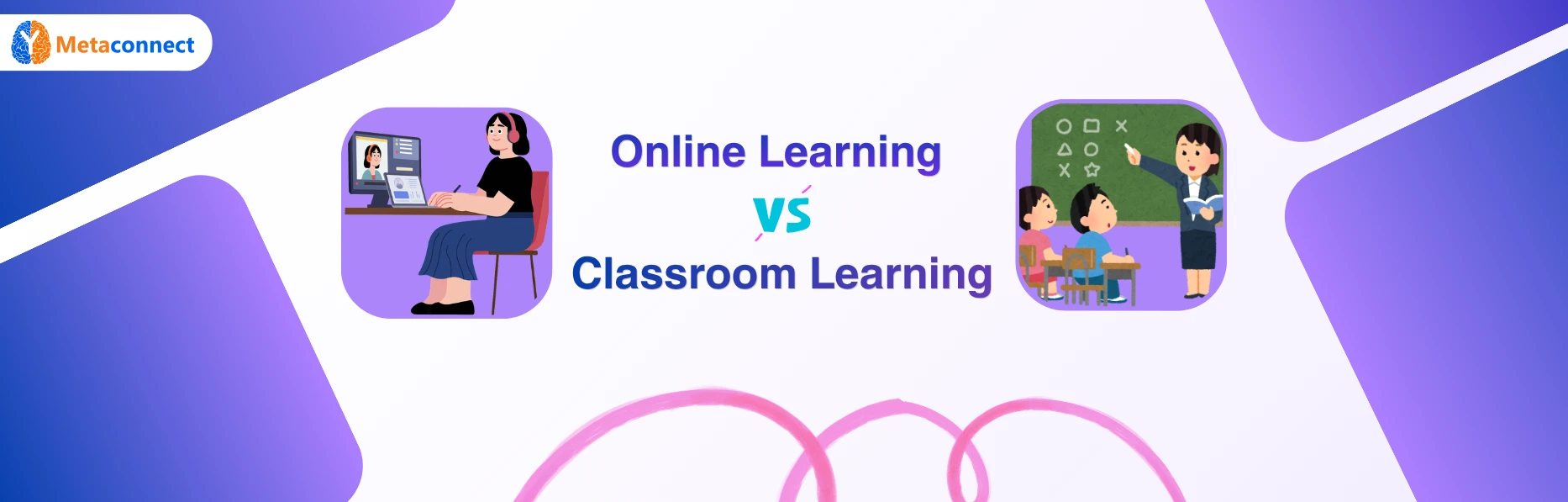
Online Learning vs Classroom Learning: Key Differences, Benefits & Which One Fits You Best?
Would your kid learn better in a class with other children or at home through online means using a computer? Well, this is one issue that has become relevant today, given that online learning has continued to gain popularity all over the world.
Parents today have more learning options than ever before. While many students perform well in a physical classroom, others feel more comfortable learning online at their own pace. The debate around online learning vs classroom learning has grown because both methods offer unique benefits and challenges.
Although there are benefits of both types of learning environments, there are also disadvantages of each that could impact a child’s concentration, self-confidence, socialization, and overall academic success.
To make the right choice, it’s important to understand how online learning and classroom learning differ in terms of flexibility, engagement, accessibility, cost, and overall student experience.
What is Online Learning?
Online learning refers to a new trend in learning whereby learners attend classes online via the internet rather than attending classes physically. The classes are held through various web applications such as Zoom, Google Meet, and other online education software programs.
The discussion around online learning vs classroom learning often begins with flexibility because online education allows students to learn from almost anywhere.
➢ Key Benefits of Online Learning
The major advantages of online learning are as follows:
- Students can attend classes from home without daily travel.
- Flexible schedules allow learners to study at their own pace.
- Recorded lessons help students revise difficult topics anytime.
- Interactive videos, quizzes, and digital tools improve engagement.
- Students can access learning resources from anywhere in the world.
- Online learning supports personalized and self-paced education.
- Families often save money on transport, uniforms, and school expenses.
Another important point in traditional vs online learning is convenience. Online classes can reduce travel stress and provide more control over study schedules.
Students also benefit from exploring different types of learning methods because every learner responds differently to online tools, visual learning, and self-paced study techniques.
What is Classroom Learning?
Classroom learning is an old form of education in which interaction takes place between students and teachers in physical classroom environments. There are strict schedules for classes, and learning happens in groups under the supervision of teachers.
When parents compare online learning vs classroom learning, classroom education is often preferred for children who benefit from routine and in-person interaction.
➢ Key Benefits of Classroom Learning
The major advantages of classroom learning are as follows:
- Students receive direct face-to-face guidance from teachers.
- Classroom discussions improve communication and participation skills.
- Fixed schedules help students develop discipline and routine.
- Group activities encourage teamwork and social interaction.
- Teachers can quickly identify and solve learning difficulties.
- Schools provide access to libraries, labs, and sports facilities.
- Fewer distractions often help students stay focused during lessons.
Classroom settings also encourage group activities, which help children build communication skills, teamwork habits, and stronger peer relationships through daily interaction.
Online Learning vs Classroom Learning: Key Differences
Let’s look at the table below to understand how online learning and classroom learning differ in key areas. This comparison will help you quickly see which learning style suits different student needs.
|
Aspect
|
Online Learning
|
Classroom Learning
|
|
Learning Environment
|
Home or remote setting.
|
School campus with a structured environment.
|
|
Flexibility
|
High flexibility and self-paced learning.
|
Fixed schedule and routine.
|
|
Student-Teacher Interaction
|
Virtual communication through digital tools.
|
Face-to-face communication.
|
|
Accessibility
|
Available from anywhere.
|
Limited to physical location.
|
|
Pace of Learning
|
Personalized learning speed.
|
Same pace for all students.
|
|
Technology Use
|
Technology-driven learning.
|
Limited or moderate technology use.
|
|
Student Engagement
|
Depends on self-discipline and digital tools.
|
More direct classroom participation.
|
|
Social Development
|
Limited physical interaction.
|
Daily peer interaction and teamwork.
|
|
Cost
|
Usually more affordable.
|
Includes transport and infrastructure costs.
|
|
Learning Resources
|
Digital resources and recorded lessons.
|
Physical books and classroom materials.
|
|
Parental Involvement
|
Higher involvement, especially for younger children.
|
Lower day-to-day involvement.
|
|
Assessment Style
|
Continuous assignments and projects.
|
Exams and periodic tests.
|
The comparison shows a clear split in learning style. Online learning prioritizes flexibility, accessibility, and independent study, which suits students who prefer learning at their own pace. It also supports individual activities, allowing students to focus on lessons and assignments at their own speed without classroom pressure.
Classroom learning, on the other hand, supports discipline, social interaction, and direct teacher guidance through a fixed routine.
The conversation around online learning vs classroom learning is not really about finding one perfect method. It is about understanding what works best for a child’s personality, discipline level, and learning habits.
Is Online Learning Better for Every Child?
Many parents ask, is online learning better than classroom learning for modern students? The answer depends completely on the child.
Students who are self-motivated and comfortable with technology may perform very well in online classes. They often enjoy learning independently and managing their own schedules.
On the other hand, children who need regular supervision, social interaction, or classroom discipline may find traditional learning more effective. Younger students also usually require more guidance from teachers and parents during online sessions.
This is why experts often encourage parents to focus less on trends and more on how their child responds to different learning environments.
How to Choose the Right Learning Method for Your Child?
Every child learns differently, so there is no single learning method that works for everyone.
Before making a decision, parents should consider factors like learning style, personality, discipline level, flexibility needs, and social preferences.
Ask yourself questions such as:
- Does your child learn better independently or in groups?
- Is flexibility important for your family schedule?
- Does your child require strong teacher supervision?
- Can your child stay focused while studying from home?
- Does your child enjoy social interaction and teamwork?
An online learning program may work for an independent learner with self-motivation. Classroom learning may be ideal for children who learn well in an environment.
A number of parents today opt for a combination of online and classroom-based programs.
Conclusion
Online and classroom education are good options that provide excellent opportunities for acquiring knowledge. Neither of the two learning processes is better than the other since all children have their own individual requirements when it comes to education.
Online learning is flexible and technologically advanced, while classroom learning is more structured with personal attention from the instructor.
The debate around online learning vs classroom learning will continue as education keeps changing. Still, the best choice always depends on the child’s needs, personality, and learning habits.
Ultimately, which one is better depends on your child’s personal traits as well as the kind of lifestyle your family lives. By understanding the strengths and challenges of both approaches, parents can make informed decisions that support their child’s academic growth, confidence, and long-term development.



 Jumpstart Journal
 R-A-R Activity
 Critical Thinking Exercise
 Picture Reflection Or Photo Caption
 Presentation
 Thematic Apperception Test (TAT)
 Flash Card
 Micro Learning
 Research Skills
 Workshop Report Presentation
 MCQ And Descriptive Questions
 Video Analysis Presentation
 Scenario Planning
 Problem Solving
 Trivia Quiz
 Flipped Classroom
 Generative Knowledge Interviewing
 Think-Pair-Share
 Fish Bowl Group Activity
 Jigsaw Method
 Simulation
 Peer Interview
 Role Play
 Debate
 Group Discussion
 Futurism And Trend Analysis
 Report Presentation
 Assignment Presentation
 Research Article Review Presentation
 Peer Teaching
 Industrial Visit Report Presentation
 Video Podcast
 Games
Games
 Business Games
 Collaborative Project
 Team Building
 Role Reversal
 Leadership Activity
 Pitch Deck
 Case Analysis Presentation


 Learner
 Mentor
 Organisation
 Learner
 Mentor
 Organisation