17 October 2026
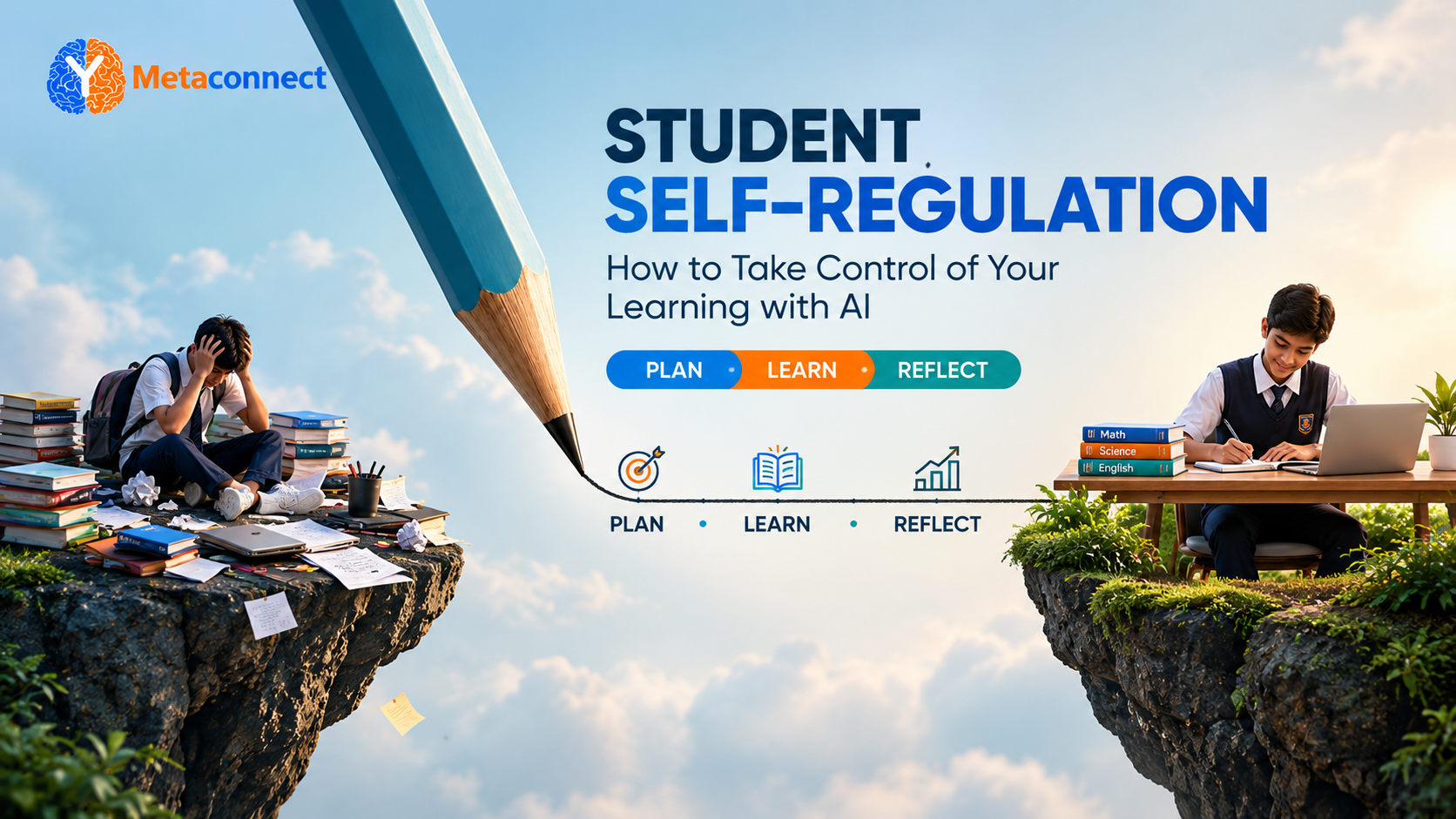
Student Self-Regulation: How to Take Control of Your Learning with AI
Students have access to more learning resources than ever before. Online courses, AI study tools for students, digital notes and practice questions make it easier to find information. But having access to these resources does not automatically mean students know how to use them effectively.
Many learners struggle with questions such as: Where should I start? How much time should I spend on each topic? Am I actually understanding what I study? What should I do when I fall behind?
These questions are connected to student self-regulation. Learning effectively is not only about understanding a subject. It is also about setting goals, managing time, monitoring progress and changing strategies when something is not working.
With the support of a personalized learning platform like YMetaConnect, students can begin to approach learning more intentionally and develop habits that support independent learning.
What Is Student Self-Regulation?
Student self-regulation is the ability to manage and improve your own learning process. It involves planning what to learn, choosing suitable strategies, checking your understanding and reflecting on your progress.
For example, imagine a student preparing for an examination. Instead of reading every chapter without a clear plan, the student identifies important topics, creates a revision schedule, practises questions and reviews mistakes. If a particular method is not helping, the student tries another approach.
This is self-regulation in practice.
It does not mean that students must study without support. Teachers, mentors and AI learning assistants can provide guidance. The important part is that learners gradually become more capable of making informed decisions about their own learning.
Why Do Students Need Self-Regulated Learning Strategies?
Studying for long hours does not always lead to better understanding. Without a clear plan, students may spend too much time on familiar topics while avoiding the concepts they find difficult.
Self-regulated learning strategies help students become more aware of how they use their time and effort.
Some important benefits include:
-
Better goal setting: Students know what they want to achieve in each study session.
-
Improved time management: Learners can organize tasks according to their deadlines and priorities.
-
Stronger understanding: Regularly checking progress helps students identify gaps in their knowledge.
-
Greater independence: Students learn to make decisions instead of relying entirely on external instructions.
-
Continuous improvement: Reflection helps learners understand what worked and what needs to change.
These habits can be especially useful during examination preparation, assignment planning and independent online learning.
The Three Stages of Self-Regulated Learning
Self-regulated learning can be approached as a continuous process. Students plan their work, take action and evaluate the results before beginning the next learning cycle.
1. Plan: Set a Clear Learning Goal
Before opening a textbook or starting an online lesson, identify what you want to accomplish.
A vague goal such as “study biology” does not provide much direction. A more specific goal could be “understand the stages of cell division and answer five practice questions.”
Students can begin by asking:
Goal setting makes study sessions more purposeful and helps learners decide where to focus their attention.
2. Act: Choose a Strategy and Practise
Once a goal is clear, choose a learning method that suits the task. Different topics may require different approaches.
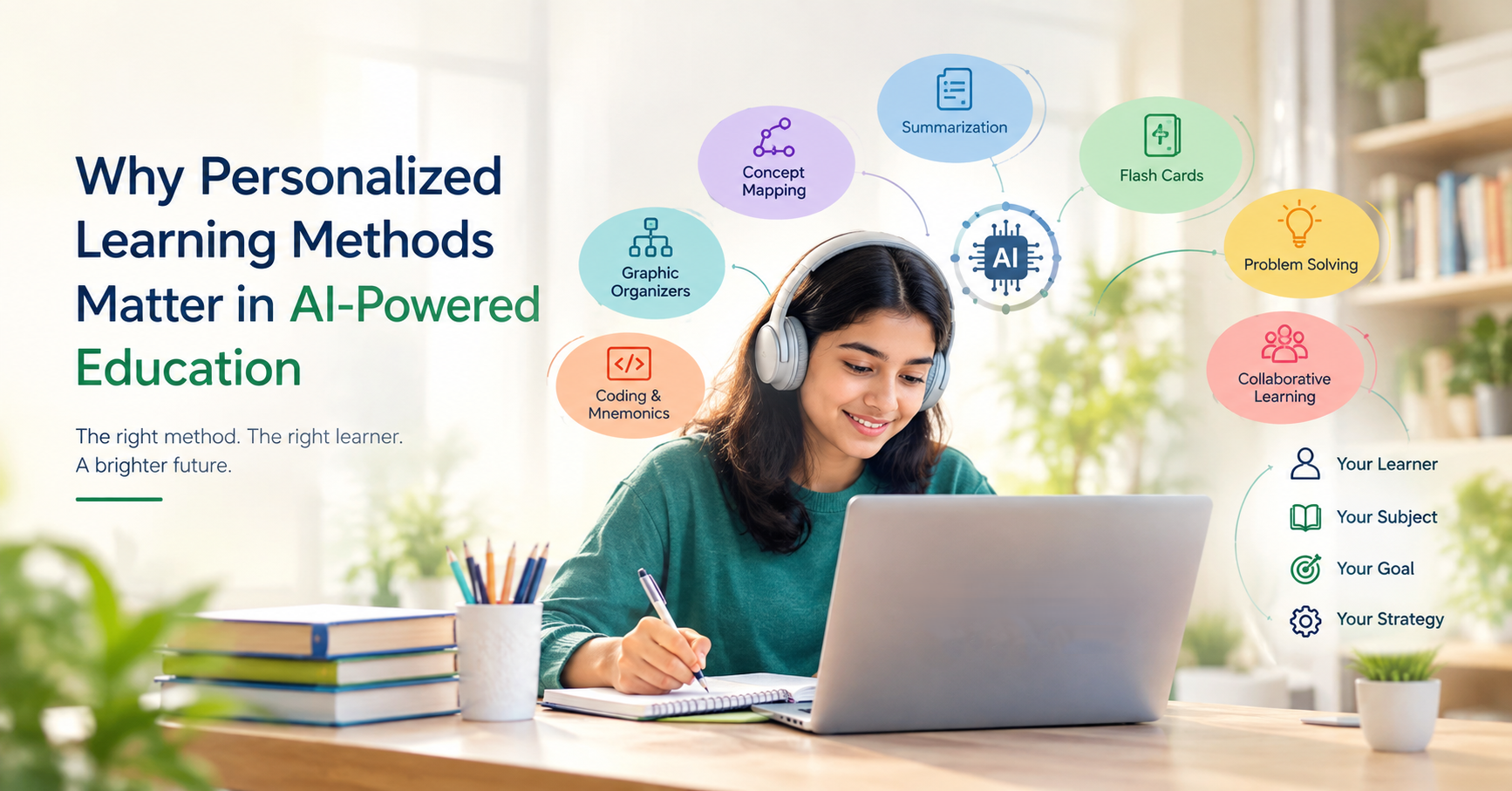
For example, Concept Mapping can help connect related ideas, while Summarization encourages students to explain information in their own words. Flash Cards can support recall practice, and Worked Examples can help learners understand how to solve problems.
AI tools for exam preparation can also help students organize study material, generate practice questions or explore difficult concepts. However, students should check the accuracy of AI-generated information and use these tools to support their understanding rather than simply copy answers.
The goal is not to use as many tools as possible. It is to choose an approach that helps you learn and apply the material.
3. Reflect: Check What You Have Learned
After completing a study session, take a few minutes to review the process.
Ask yourself: Could I explain the topic without looking at my notes? Which questions were difficult? Did the method help me understand the concept? What should I revise next?
Reflection helps students recognize the difference between information they have merely read and concepts they can genuinely explain or apply.
These questions are also part of metacognitive learning strategies, which encourage learners to think about their own thinking and become more aware of how they learn.
How AI Can Support Student Self-Regulation
AI can help students access explanations, organize information and explore different ways of learning. But its value goes beyond providing quick answers. When used thoughtfully, AI can support planning, practice and reflection.
An AI learning assistant for students may help with tasks such as breaking a large topic into smaller sections, creating revision questions or explaining a difficult concept in another way.
An AI-powered learning platform can also bring learning methods and structured activities into one learning environment. This can make it easier for students to move from reading information to practising, evaluating and improving their understanding.
YMetaConnect follows this approach through its Learning Studio and SIMD system.
Learning Studio: Turn Study Material into Learning Activities
YMetaConnect’s Learning Studio supports AI-assisted learning through structured learning methods and activities. Learners can upload study material, explore recommended methods, complete a 3C analysis, reflect on their experience and apply their knowledge through activities.
Its R-A-R AI approach Review, Action and Reflection provides a useful framework for engaging with learning material.
-
Review: Examine the learning material and identify what needs attention.
-
Action: Work through an appropriate learning method or activity.
-
Reflection: Consider what you understood, what challenged you and what to improve next.
This process encourages students to take an active role in their learning rather than depending only on passive reading.
SIMD: Build Awareness of Your Learning Process
YMetaConnect’s SIMD system focuses on self-guided learning and metacognitive development. It includes learning-strategy assessment, metacognitive assessment, goal setting, exam and assignment planning, daily learning journals and self-regulation tracking.
These features connect with the practical stages of self-regulated learning. Students can plan their work, consider their learning strategies and reflect on their progress.
Student learning assessment tools can be valuable when they help learners identify areas for improvement and make more informed learning decisions. Assessment should not only be about measuring performance; it can also help students understand what to work on next.
A Simple Self-Regulated Study Routine for Students
You do not need to change your entire study routine in one day. Start with one subject and use this simple process.
Before studying: Choose one specific goal and decide how much time you will spend on it.
During studying: Use a suitable method, such as summarization, concept mapping, flash cards or problem-solving practice. Avoid switching between tools without a clear reason.
After studying: Test your understanding, identify difficult areas and write down what you need to revisit.
Before the next session: Use your reflections to adjust your plan. Spend more time on concepts you have not understood and choose a different strategy if necessary.
For example, if you struggle to explain a topic after reading it, try summarizing it in your own words or answering questions without referring to your notes. If you understand a concept but cannot solve related problems, practise worked examples and then attempt similar questions independently.
Over time, this process can help you develop a more organized and purposeful study routine.
The Future of Learning Is About Becoming an Independent Learner
Online learning tools for students and AI-based education platforms can make learning resources more accessible. However, access to technology alone does not guarantee better learning outcomes.
Students still need to decide what to learn, choose appropriate strategies, evaluate their understanding and take responsibility for improving.
This is why self-regulation, metacognition and personalized learning are closely connected. AI can provide support, learning methods can offer structure, and reflection can help learners understand their progress. The student remains at the centre of the process.
The aim is not to make students dependent on AI for every answer. It is to help them become more confident in asking questions, making decisions and learning independently.
Final Takeaway
Student self-regulation begins with small decisions: setting a goal, choosing a suitable learning method, checking understanding and reflecting on what to improve.
By combining these habits with thoughtful use of AI study tools for students, learners can make their study sessions more intentional and develop greater awareness of their learning process.
YMetaConnect brings together AI-supported learning, structured methods and reflection to support this journey. Explore the Learning Studio and discover ways to make your learning more purposeful.
Explore YMetaConnect: ymetaconnect.com



 Jumpstart Journal
 R-A-R Activity
 Critical Thinking Exercise
 Picture Reflection Or Photo Caption
 Presentation
 Thematic Apperception Test (TAT)
 Flash Card
 Micro Learning
 Research Skills
 Workshop Report Presentation
 MCQ And Descriptive Questions
 Video Analysis Presentation
 Scenario Planning
 Problem Solving
 Trivia Quiz
 Flipped Classroom
 Generative Knowledge Interviewing
 Think-Pair-Share
 Fish Bowl Group Activity
 Jigsaw Method
 Simulation
 Peer Interview
 Role Play
 Debate
 Group Discussion
 Futurism And Trend Analysis
 Report Presentation
 Assignment Presentation
 Research Article Review Presentation
 Peer Teaching
 Industrial Visit Report Presentation
 Video Podcast
 Games
Games
 Business Games
 Collaborative Project
 Team Building
 Role Reversal
 Leadership Activity
 Pitch Deck
 Case Analysis Presentation


 Learner
 Mentor
 Organisation
 Learner
 Mentor
 Organisation