24 October 2026
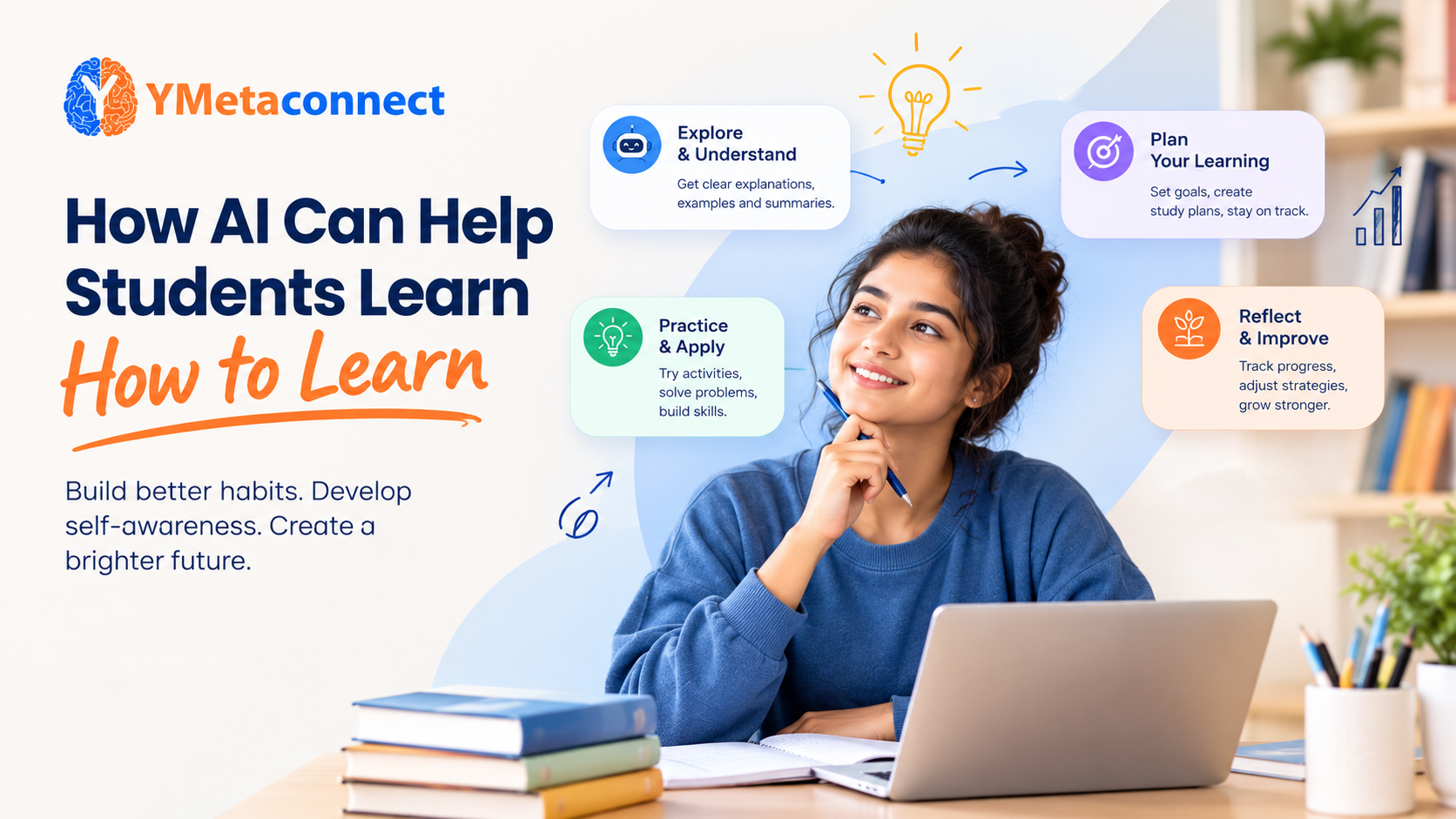
How AI Can Help Students Learn How to Learn
How AI Can Help Students Learn How to Learn
Introduction: Is Studying More Always the Answer?
Students today have access to more educational resources than ever before. Online courses, digital libraries, videos and AI tools make it easier to find explanations and explore unfamiliar subjects. Yet having access to information does not automatically mean that a student understands it.
A learner might read an entire chapter and still struggle to explain its main ideas. Another might spend hours preparing for an examination without knowing which topics need more attention. In these situations, the challenge is not simply a lack of information. It is knowing how to approach learning effectively.
This is where an AI-powered learning platform can offer meaningful support. Beyond helping students access information, technology can support the process of planning, practising, evaluating and improving their learning habits.
At YMetaConnect, learning is approached as an active process. Through its Learning Studio, SIMD tools and R-A-R framework, the platform connects learning methods with practical activities and reflection.
What Does It Mean to Learn How to Learn?
Learning how to learn means understanding the strategies and habits that help you make sense of information, monitor your progress and improve your approach when something is not working.
It involves more than memorising facts. Students need to identify what they already understand, recognise knowledge gaps, choose suitable study methods and check whether they can apply what they have learned.
This connects to metacognition, commonly described as thinking about your own thinking. In education, metacognition helps learners consider questions such as:
- What am I trying to understand?
- Which part of this topic is difficult for me?
- Which learning method should I try?
- Can I explain this concept in my own words?
- What should I change in my next study session?
These questions encourage students to take an active role in their education instead of following the same routine for every subject.
How AI Can Support the Learning Process
AI can help students explore concepts, organise information and practise what they have learned. Its value depends on how it is used: asking for a ready-made answer is different from using technology to develop understanding.
1. Breaking Down Difficult Concepts
A complex topic can feel overwhelming when students try to understand everything at once. AI-assisted learning tools can help present information in smaller sections, provide alternative explanations and generate examples for further exploration.
For example, a student studying a scientific concept might begin with a simple explanation, move to a worked example and then attempt a practice question.
The goal is not to avoid challenging material. It is to approach it in manageable steps and gradually build understanding.
2. Exploring Different Learning Methods
A single study method may not be suitable for every task. Some topics are easier to understand through concept maps, while others require worked examples, summaries, discussions or practical problem-solving.
An AI-supported learning environment can help learners explore different methods according to their material and goals. Students can then evaluate which methods helped them understand the subject and which need adjustment.
Personalized learning should not mean that technology makes every decision. Learners still need to practise, assess their understanding and choose the next step.
3. Turning Passive Reading into Active Learning
Reading notes repeatedly can create a feeling of familiarity without confirming whether the information has been understood.
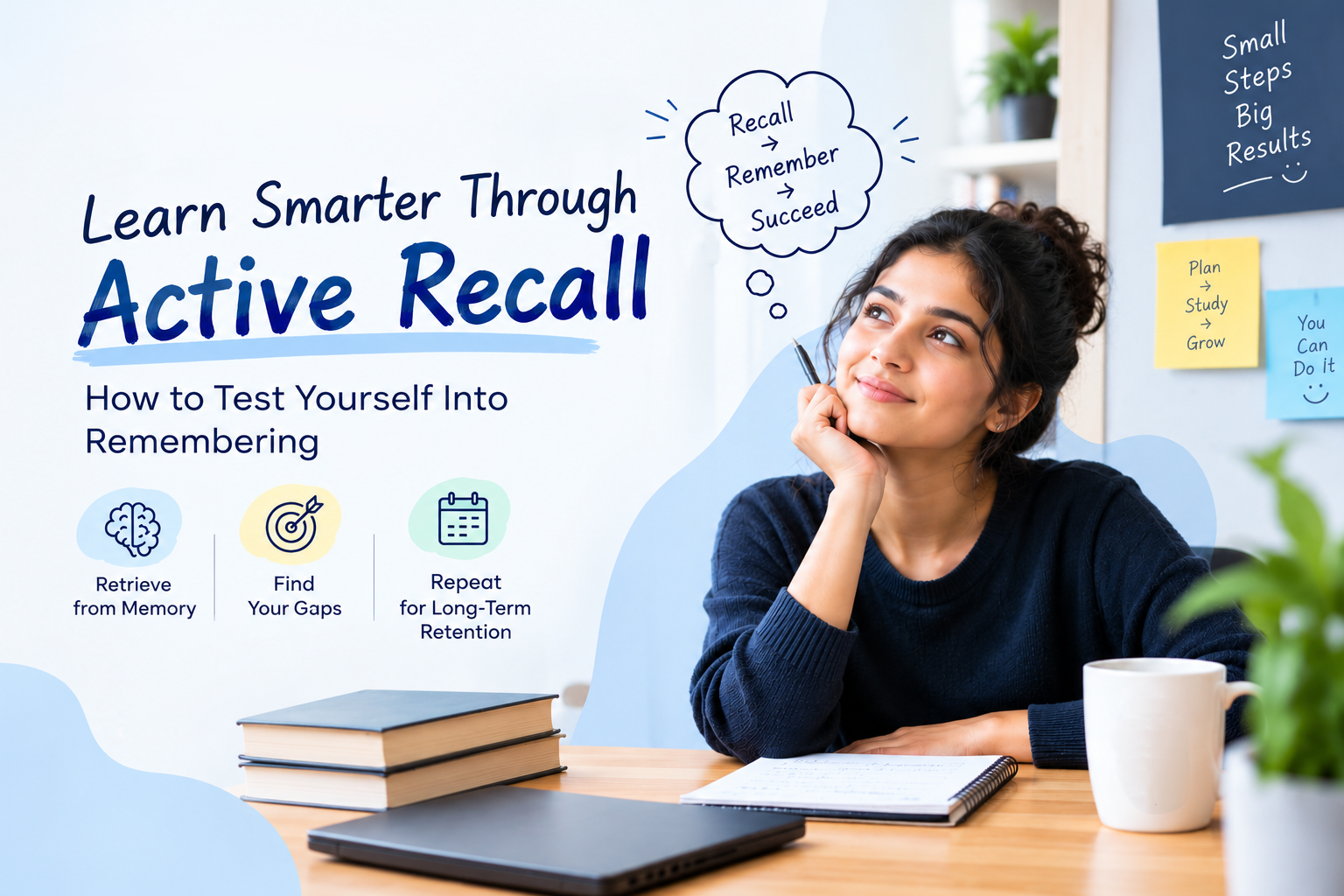
Active learning asks students to do something with the material. They might explain an idea without looking at their notes, solve a problem, compare two concepts or complete an activity that applies the information.
AI can support this process by helping learners create practice questions, explore examples or prepare activities. The important step is to attempt the task independently and check the reasoning behind the answer.
4. Supporting Study Planning and Progress Tracking
Effective learning also requires organisation. Students may need to divide a large assignment into smaller tasks, establish a timetable and review progress before a deadline.
YMetaConnect's SIMD system includes tools for learning-strategy assessment, metacognitive assessment, goal setting, exam and assignment planning, daily learning journals and self-regulation tracking.
These tools are designed to help learners plan their work, monitor their habits and reflect on their progress. Rather than relying only on a final test result, students can consider what they did, where they experienced difficulty and what they should improve.
The R-A-R Framework: Review, Action and Reflection
Technology is most useful when it supports a clear learning process. YMetaConnect uses the R-A-R framework Review, Action and Reflection to connect understanding with practical application and evaluation.
Review: Understand the Material
Begin by examining the learning material. Identify the main ideas, familiar concepts and areas that require further attention.
Learners can use suitable methods such as summarisation, concept mapping or structured questions to organise what they are studying.
Useful questions include:
- What are the main ideas?
- What do I already know?
- Which concepts need more explanation?
Action: Apply What You Have Learned
The next step is to use the information. Solve a problem, complete a learning activity, work through an example or explain the concept in your own words.
Application helps learners move beyond recognising information to demonstrating what they understand.
Reflection: Evaluate and Improve
After completing an activity, consider the result. Which parts went well? Where did you make mistakes? Was the chosen learning method helpful?
Reflection turns an individual study session into an opportunity to improve the next one. Students can adjust their strategies rather than repeating the same approach without evaluating its effectiveness.
Together, Review, Action and Reflection create a repeatable learning cycle that can be used across subjects and learning goals.
Why Self-Regulated Learning Matters
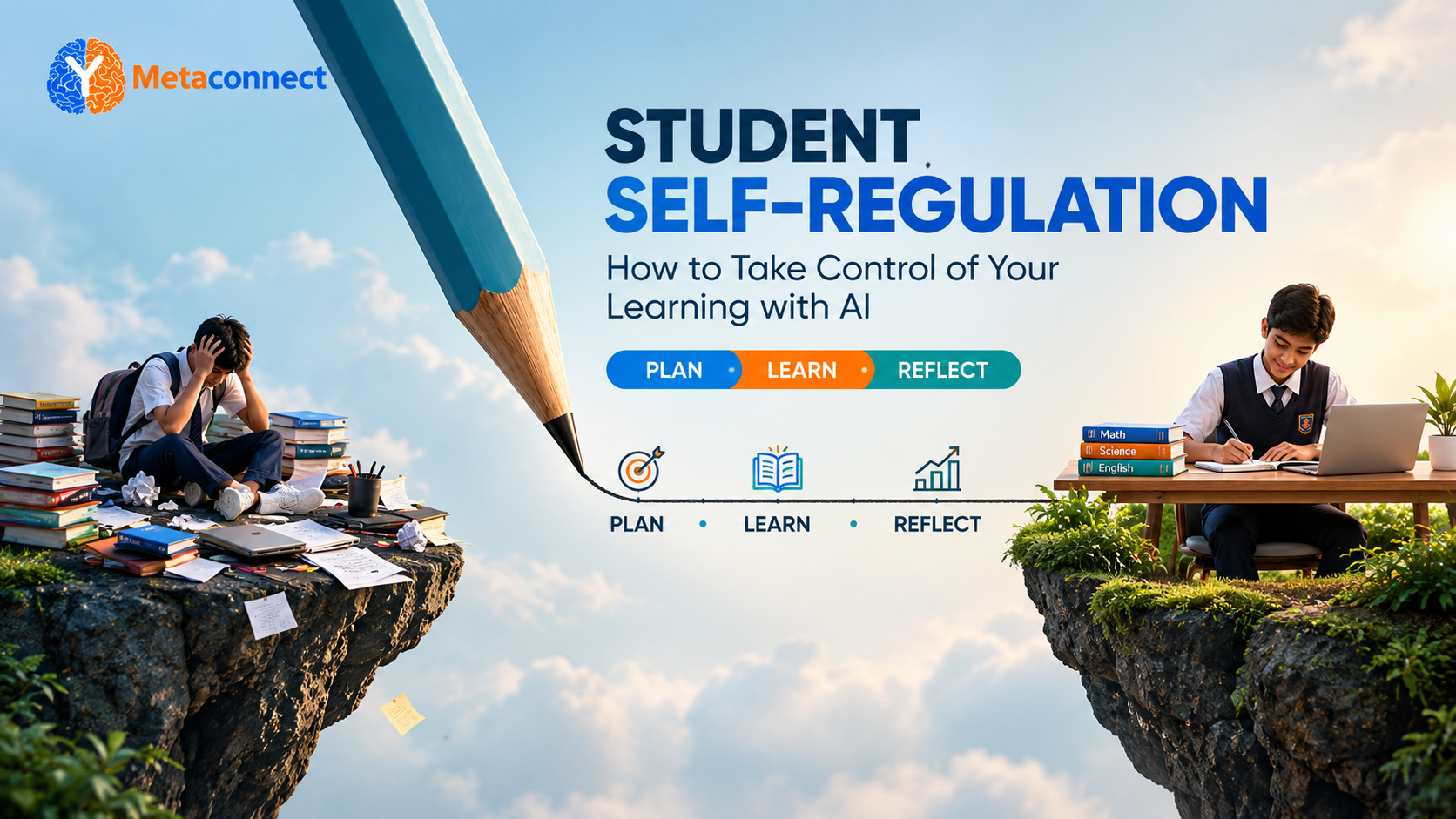
Self-regulated learning involves setting goals, selecting strategies, monitoring progress and making adjustments. These habits are valuable because students increasingly need to manage independent study, online learning and skill development.
A self-regulated learner does not need to understand everything immediately. Instead, they learn to recognise difficulties and respond constructively.
For example, a student preparing for an examination might discover through practice questions that they understand a concept but struggle to apply it. The next study session can focus on worked examples and problem-solving instead of repeating the same notes.
Over time, this approach can help students make more informed decisions about how they use their study time.
AI Should Support Thinking, Not Replace It
AI-generated information should not be accepted automatically. AI tools can produce incomplete or incorrect responses, so students need to check important information against reliable sources, question explanations and use their own reasoning.
Responsible AI-supported learning involves:
- Checking facts and evidence.
- Explaining ideas in your own words.
- Attempting problems before reviewing solutions.
- Following academic integrity requirements.
- Using feedback to identify areas for improvement.
The aim is to build independent learners who can use technology thoughtfully while retaining responsibility for their decisions and understanding.
How YMetaConnect Supports Structured Learning
YMetaConnect brings together AI-supported learning, structured learning methods and self-guided tools. Its Learning Studio supports learners as they work with study materials, explore methods, complete analysis and activities, and reflect on their learning.
Its SIMD system focuses on planning, monitoring and self-regulation. The R-A-R framework connects reviewing information with practical action and reflection.
Together, these approaches give learners a structure for moving from simply accessing information towards engaging with it, applying it and evaluating their progress.
Students can explore the platform to understand how its tools fit their learning needs and goals.
Conclusion: Build the Skill of Learning
The future of education is not only about making information easier to access. It is also about helping students understand how to use that information, identify what they need to improve and apply knowledge with confidence.
An AI-powered learning platform can support this journey when technology is combined with purposeful learning methods, practice and reflection.
With structured approaches such as SIMD and R-A-R, YMetaConnect encourages learners to plan their work, take action and reflect on their progress.
The most useful question may not be, “How quickly can I find the answer?” It may be, “How well do I understand it, and what can I do with what I have learned?”
Explore YMetaConnect: ymetaconnect.com


 Jumpstart Journal
 R-A-R Activity
 Critical Thinking Exercise
 Picture Reflection Or Photo Caption
 Presentation
 Thematic Apperception Test (TAT)
 Flash Card
 Micro Learning
 Research Skills
 Workshop Report Presentation
 MCQ And Descriptive Questions
 Video Analysis Presentation
 Scenario Planning
 Problem Solving
 Trivia Quiz
 Flipped Classroom
 Generative Knowledge Interviewing
 Think-Pair-Share
 Fish Bowl Group Activity
 Jigsaw Method
 Simulation
 Peer Interview
 Role Play
 Debate
 Group Discussion
 Futurism And Trend Analysis
 Report Presentation
 Assignment Presentation
 Research Article Review Presentation
 Peer Teaching
 Industrial Visit Report Presentation
 Video Podcast
 Games
 Business Games
 Collaborative Project
 Team Building
 Role Reversal
 Leadership Activity
 Pitch Deck
 Case Analysis Presentation


 Learner
 Mentor
 Organisation
 Learner
 Mentor
 Organisation